
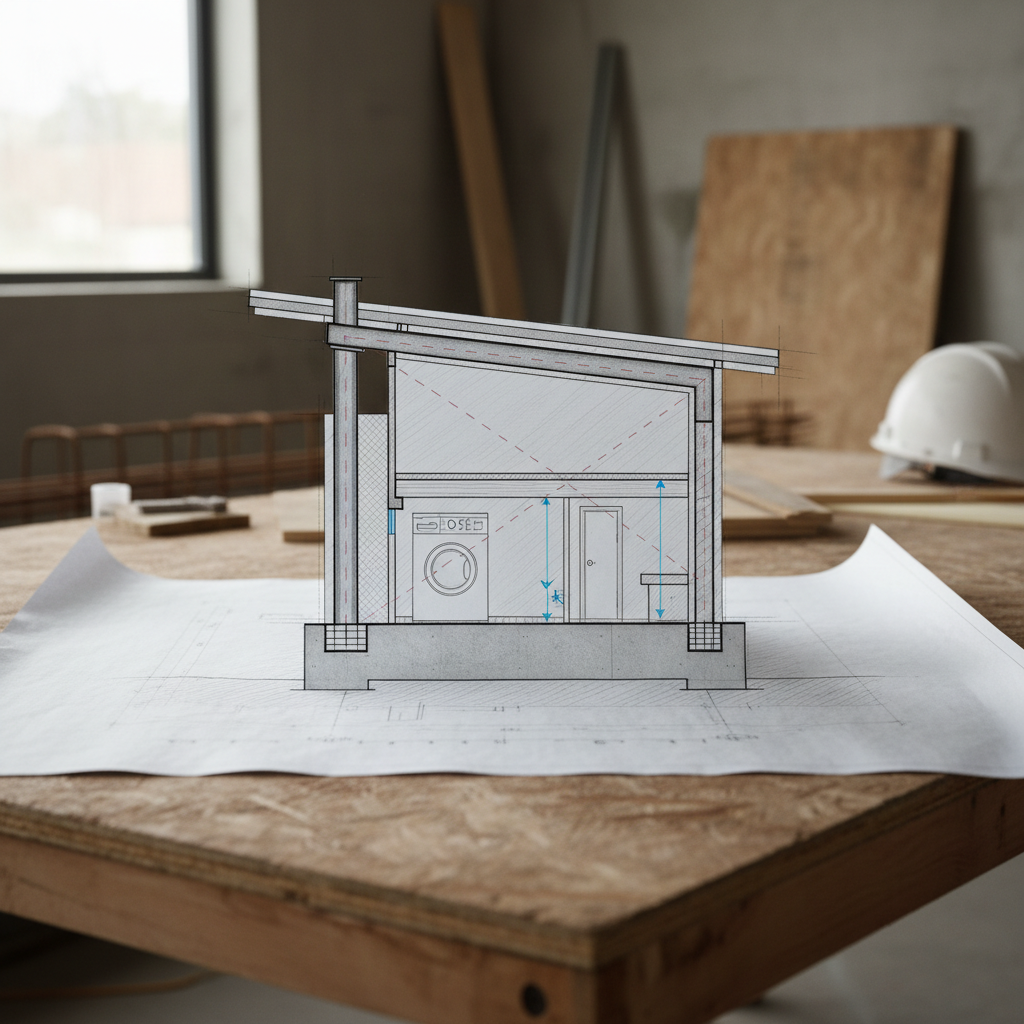
When planning or building an Accessory Dwelling Unit (ADU), conversations often revolve around design aesthetics, floor plans, and finishes. However, beneath the surface of every sturdy structure lies a complex framework of engineering principles, chief among them the concept of point load in ADU structural engineering. Understanding what a point load is and, more importantly, how it gets safely transferred through your ADU's structure is fundamental to its long-term stability, safety, and compliance with California's stringent building codes.
At GatherADU, we believe in building ADUs that are not only beautiful and functional but also engineered with the utmost integrity. This article will demystify point loads, explain their significance in ADU construction, and detail the ingenious ways structural engineers ensure these concentrated forces are safely managed.
What Exactly Is a Point Load?
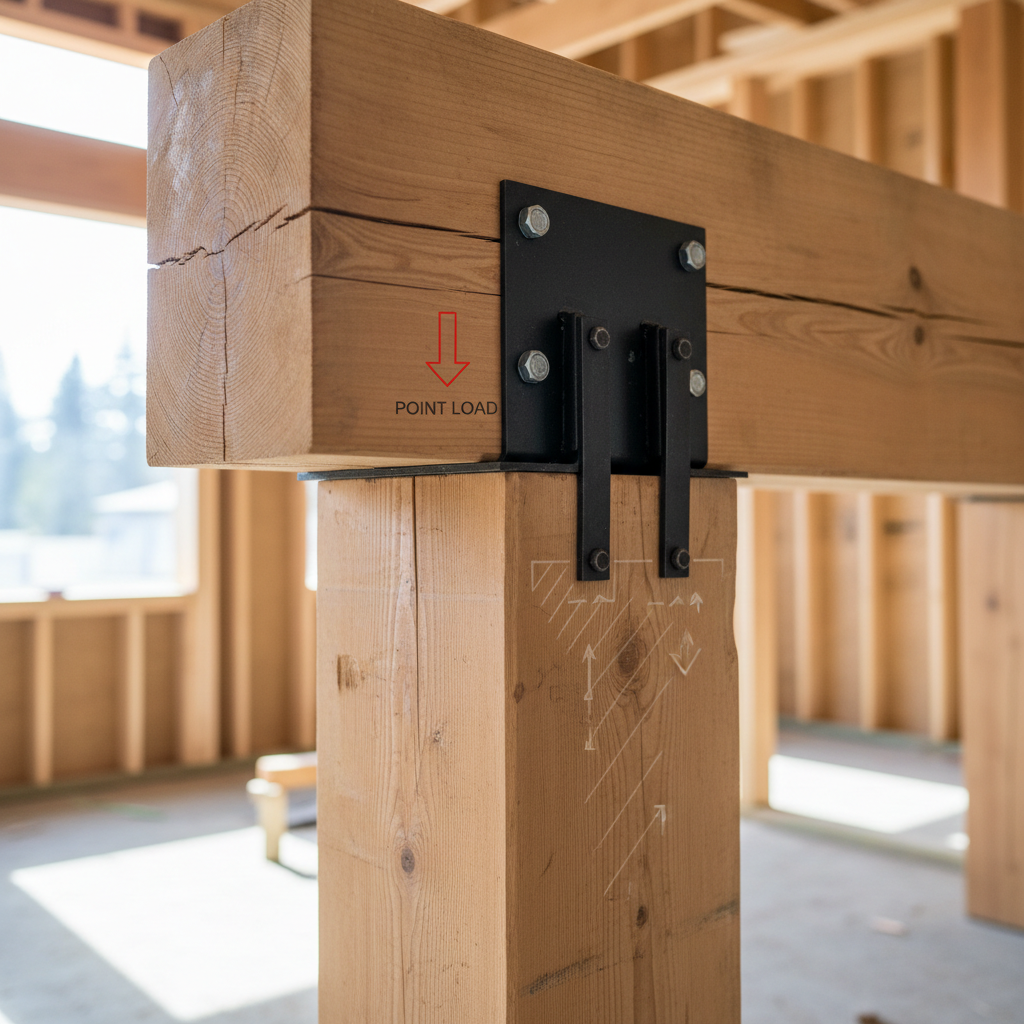
In the simplest terms, a point load (also known as a concentrated load) is a force applied to a very small area of a structural element, as opposed to a distributed load, which is spread out over a larger area. Imagine pushing your finger onto a piece of wood – that's a point load. Now imagine placing a book flat on the wood – that's a distributed load.
While no load is ever truly concentrated at a single, infinitely small point in reality, in structural engineering, a load is considered a point load if its area of application is small relative to the overall dimensions of the structural member it's acting upon. This distinction is vital because point loads create much higher localized stresses than distributed loads of the same magnitude, requiring specific design considerations.
Point Load vs. Distributed Load: An Analogy
- Point Load: Think of a single, heavy support post resting on a beam, or a large, cast-iron bathtub sitting on a floor joist. The weight is concentrated in one specific spot.
- Distributed Load: Imagine a snow load evenly spread across an entire roof, or the weight of a concrete slab across the ground. The force is spread out, reducing stress at any single point.
Why Point Loads Matter So Much in ADUs
ADUs, despite their often compact size, are subject to the same rigorous structural demands as larger homes. In fact, their smaller footprint can sometimes amplify the challenges of managing point loads:
- Space Constraints: Limited space means that heavy fixtures, appliances, or structural elements might be positioned in ways that create significant point loads in specific areas.
- Diverse Functionality: ADUs can serve various purposes – a rental unit, an in-law suite, an office, or a gym. Each use can introduce unique and heavy concentrated loads.
- California Building Codes: California has strict seismic and structural building codes. Proper point load transfer is non-negotiable for obtaining permits and ensuring occupant safety, especially in earthquake-prone regions.
- Longevity and Durability: Ignoring or improperly addressing point loads can lead to structural sagging, cracking, premature wear, and costly repairs down the line.
Common Sources of Point Loads in Your ADU
Point loads in an ADU can originate from various elements. Recognizing these sources is the first step in designing a robust structure:
- Structural Columns and Posts: Vertical members supporting beams, especially at corners or where large spans meet.
- Beam Ends: Where a beam rests on a wall, another beam, or a column, it transfers a concentrated load from everything above it.
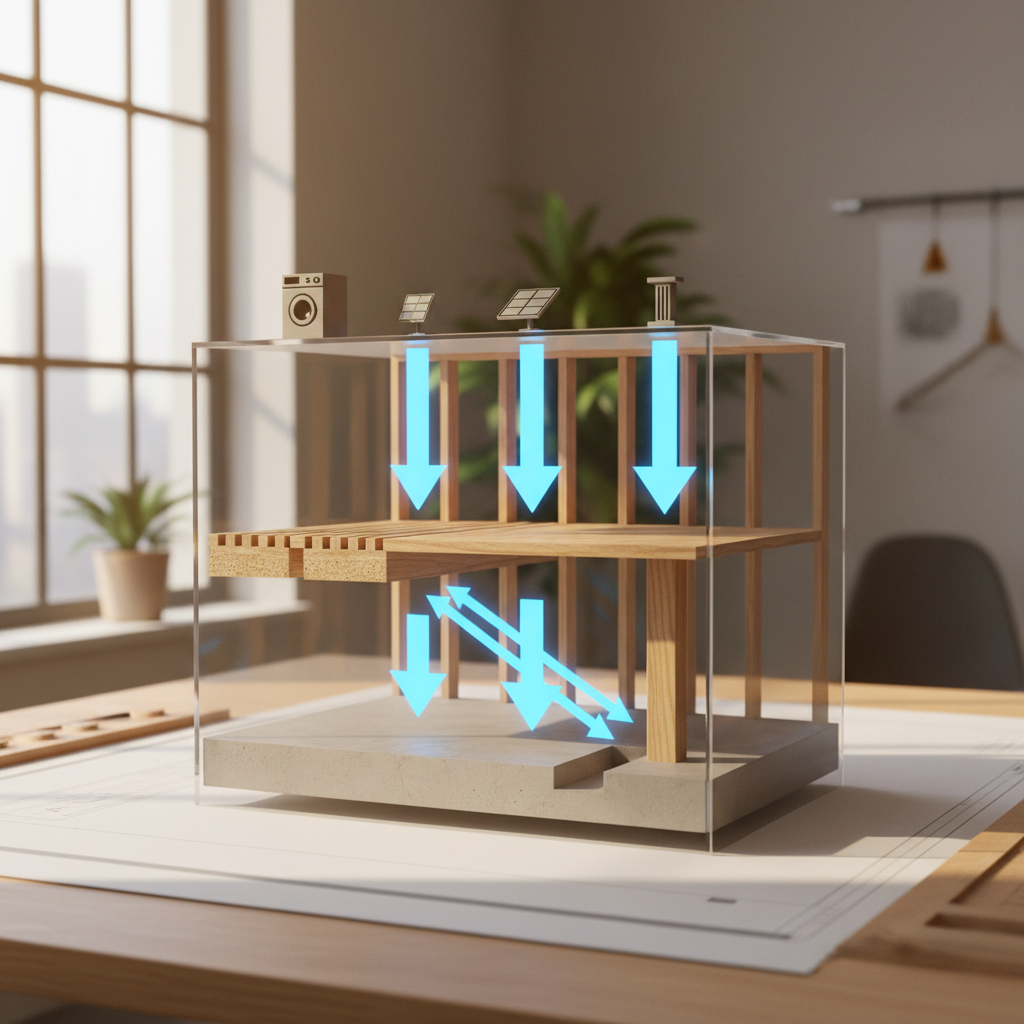
- Heavy Fixtures and Appliances: Large refrigerators, stackable washer/dryer units, cast-iron bathtubs, water heaters, and even certain types of cabinetry can create significant point loads on floor systems.
- Roof-Mounted Equipment: Solar panels, HVAC units, or even concentrated snow loads (though less common in much of California) can create point loads on roof rafters or trusses.
- Cantilevered Structures: Any portion of the ADU that extends beyond its main support, like a small balcony or an overhang, will create concentrated forces at its connection point to the main structure.
The Crucial Process: How Point Loads Get Transferred
The magic of structural engineering lies in its ability to safely transfer these concentrated forces, layer by layer, down to the ground. This process ensures that no single component is overstressed.
1. From the Point of Application to the Framing
- Beams and Headers: When a point load (e.g., from a roof post) lands on a beam, that beam is designed to carry and distribute that load horizontally to its support points (columns or walls). Similarly, a header above a window or door opening will carry the concentrated load from the wall above it and transfer it to the jack studs on either side.
- Joists and Rafters: For floor or roof loads, the joists or rafters directly beneath the point load will bear the initial brunt. Engineers might specify stronger, deeper, or doubled-up joists/rafters in these areas, or use specialized blocking and strongbacks to help distribute the load to adjacent members.
Schedule a free ADU consultation with GatherADU today to learn more about how we engineer robust and safe ADU structures.
2. Through Walls and Columns to the Foundation
- Studs and Walls: The concentrated loads from beams, headers, or heavy floor systems are then transferred vertically down through the wall studs. Shear walls, designed to resist lateral (sideways) forces like wind and seismic activity, also play a critical role in vertical load transfer, distributing forces more evenly.
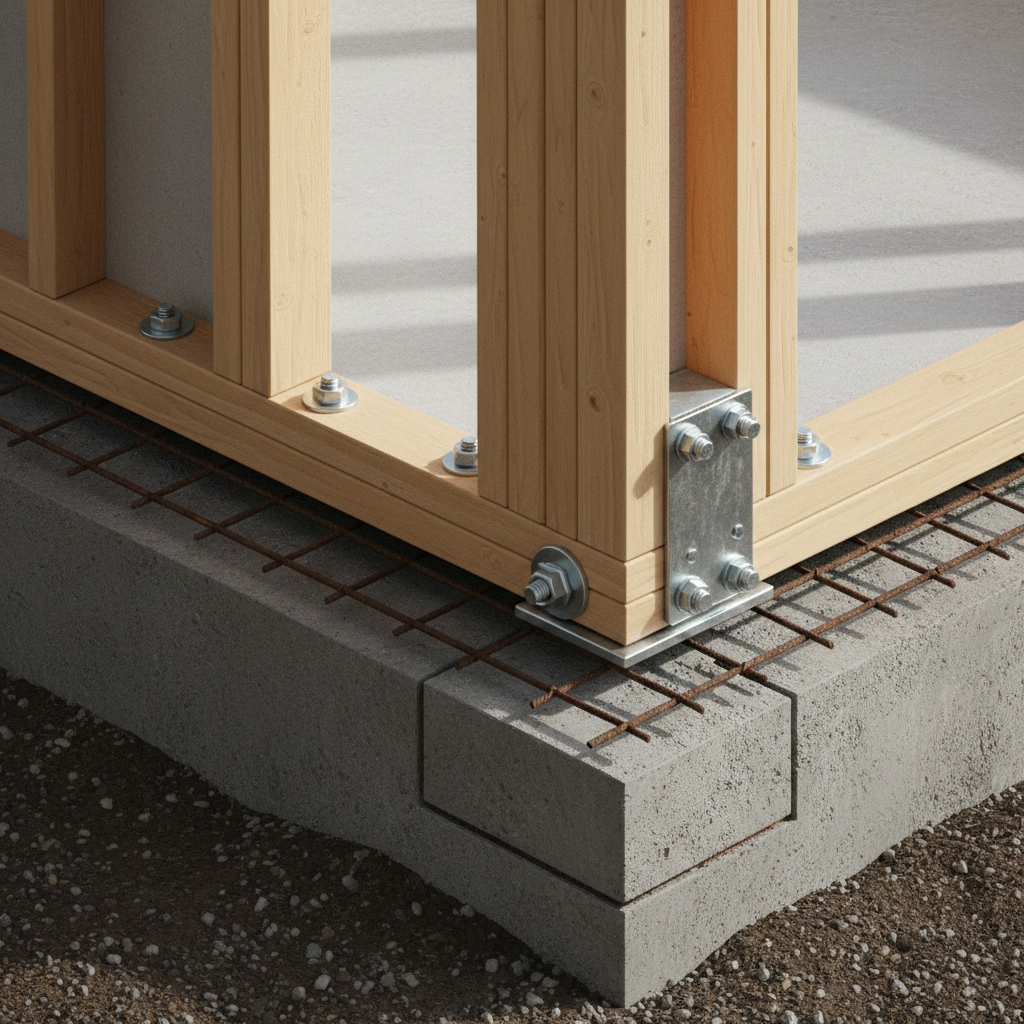
- Hold-Downs and Straps: In seismic zones, specialized connectors (like steel hold-downs) are used to positively connect the wall framing to the foundation, preventing uplift and ensuring continuous load path during an earthquake.
- Columns: If a specific column is directly supporting a significant point load, it must be adequately sized and reinforced to transfer that force directly to the foundation below.
3. Into the Ground: The Foundation's Role
Ultimately, all loads, whether point or distributed, must be safely transferred into the earth. This is where the foundation system comes in:
- Footings and Piers: Where a concentrated load from a column or a heavy wall section meets the foundation, an enlarged footing or pier is typically designed. This increases the bearing area, spreading the concentrated force over a larger section of soil. Without adequately sized footings, the concentrated load could exceed the soil's bearing capacity, leading to settlement and structural damage.
- Slab-on-Grade Foundations: For ADUs built on a slab, thickened edges and reinforced sections of the slab will be designed beneath load-bearing walls and columns to handle point loads effectively.
- Stem Walls: In raised foundations, stem walls (the vertical walls that sit on top of footings) transfer loads from the framed walls above to the footings below.
Engineering Techniques and Materials for Safe Transfer
Structural engineers employ various techniques and materials to manage point loads:
- Blocking and Strongbacks: Wood blocking between joists or strongbacks (additional framing members) help distribute a point load from one joist to several adjacent ones, preventing localized deflection.
- Double or Triple Headers/Beams: Using multiple pieces of lumber fastened together creates stronger headers or beams capable of carrying heavier concentrated loads.
- Steel Plates and Connectors: Steel plates or specialized connectors (e.g., from Simpson Strong-Tie) are often used at critical connection points to reinforce joints and ensure a robust transfer of force.
- Reinforced Concrete: Foundations, footings, and slabs are reinforced with rebar (steel reinforcing bars) to enhance their strength and ability to resist concentrated pressures.
- Specialized Framing: Engineers might specify specific framing layouts, such as creating a small 'post-and-beam' section within a conventionally framed wall, to directly carry a heavy point load.
The Indispensable Role of a Structural Engineer
It cannot be overstated: the proper management of point loads is a job for licensed structural engineers. They perform complex calculations to:
- Determine the magnitude and location of all potential point loads.
- Analyze the strength and deflection characteristics of various structural members.
- Design appropriate framing, foundation elements, and connection details to safely transfer these loads.
- Ensure compliance with all local and state building codes, including seismic requirements.
Attempting to cut corners or forego professional engineering for your ADU's structural design is a gamble with potentially catastrophic consequences.
Consequences of Improper Point Load Transfer
When point loads are not properly accounted for and transferred, the results can range from minor annoyances to severe structural failure:
- Cracking: Walls, ceilings, and foundations can develop cracks as the structure tries to accommodate unresolved stresses.
- Sagging or Deflection: Beams, joists, or floor sections may visibly sag or deflect under the concentrated weight.
- Door and Window Issues: Frames can warp, leading to doors and windows that stick or don't close properly.
- Safety Hazards: In extreme cases, improper load transfer can lead to partial or complete structural collapse, posing a significant risk to occupants.
- Costly Repairs: Fixing structural issues after construction is significantly more expensive and disruptive than addressing them during the design phase.
- Permit and Inspection Failures: Your ADU will not pass inspection if structural deficiencies related to point loads are identified, leading to delays and rework.
Building a Resilient ADU with GatherADU
At GatherADU, our commitment to structural integrity is woven into every ADU we design and build. We work with highly experienced structural engineers who meticulously analyze every aspect of your ADU's design, ensuring that all point loads are identified, calculated, and safely transferred from the roof to the foundation. This meticulous approach guarantees your backyard home is not just beautiful and functional, but also incredibly safe, durable, and fully compliant with California's rigorous building standards.
Conclusion
Understanding what is a point load in ADU structural engineering and how it gets transferred is critical for anyone considering an ADU project. It's a complex but essential aspect of construction that directly impacts the safety, longevity, and value of your investment. By entrusting your ADU project to experts like GatherADU, you ensure that these critical engineering principles are handled with the precision and professionalism they demand. Don't leave the structural integrity of your ADU to chance. Partner with GatherADU's experienced team to ensure your backyard home is built to last, safely and efficiently. Book your free ADU consultation now and take the first step towards a perfectly engineered ADU.