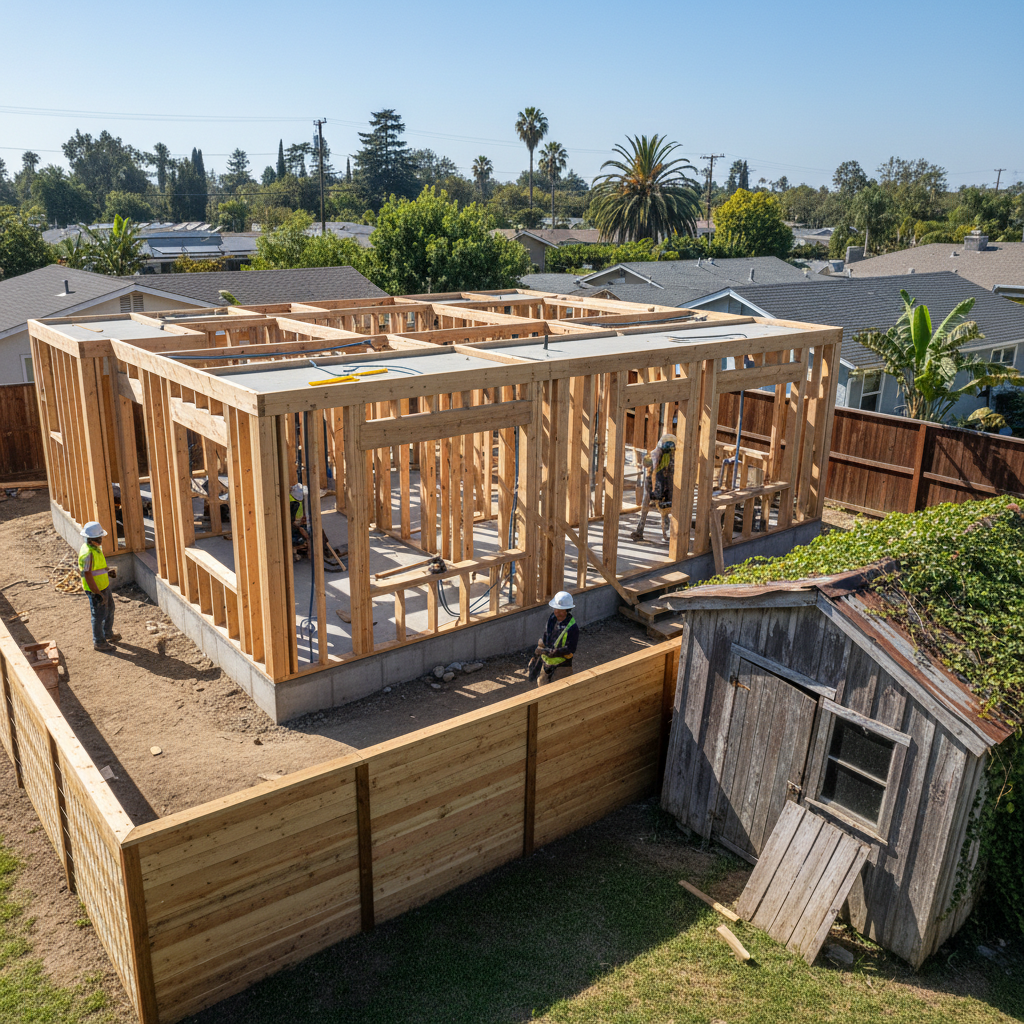
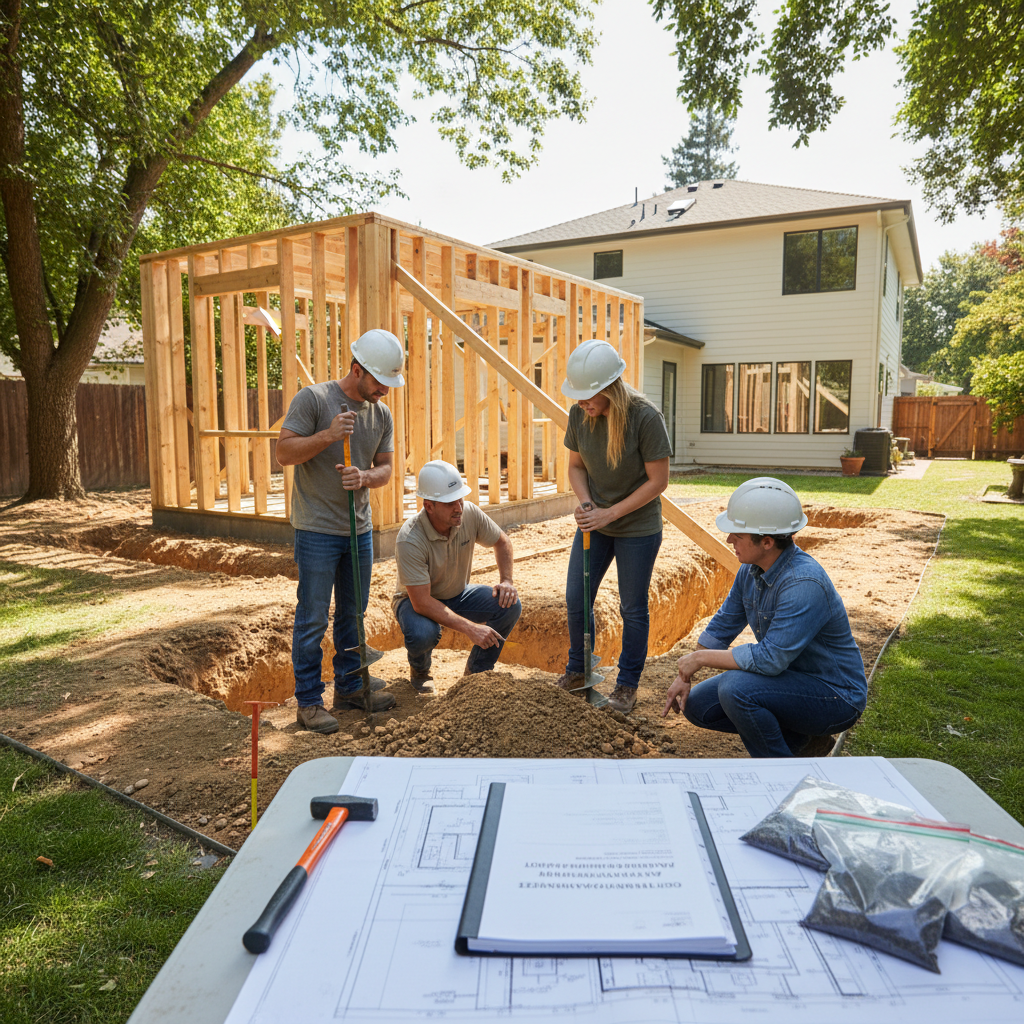
Embarking on an Accessory Dwelling Unit (ADU) project in California is an exciting venture, offering homeowners expanded living space, rental income, or housing for loved ones. However, beneath the dream of a new backyard home lies a critical, often overlooked, step: understanding your property's soil and geology. This is where an ADU geotechnical report comes into play.
A geotechnical report is far more than just a bureaucratic hurdle; it's a foundational document that ensures the safety, stability, and longevity of your ADU. It provides a detailed analysis of the subsurface conditions of your property, guiding engineers and builders in designing a robust foundation that can withstand California's diverse geological challenges, from expansive soils to seismic activity. Ignoring this crucial step can lead to significant structural problems, costly delays, and even safety hazards down the line.
At GatherADU, we believe in empowering homeowners with knowledge. This comprehensive guide will demystify the ADU geotechnical report, explaining when it's typically required for your project in California and what vital information it contains to protect your investment.
Why Geotechnical Reports Are Essential for ADU Projects
The ground beneath our feet is rarely as uniform or stable as it appears. Variations in soil composition, rock formations, groundwater levels, and seismic activity can all profoundly impact how a structure performs over time. For an ADU, a relatively smaller but equally important structure, understanding these subsurface conditions is paramount for several reasons:
- Structural Integrity: The primary function of a geotechnical report is to ensure your ADU's foundation is appropriate for the existing soil conditions. Without it, you risk uneven settling, cracking, or even structural failure, leading to expensive repairs and potential safety risks.
- Safety: California is prone to seismic activity. A geotechnical report identifies potential seismic hazards like liquefaction, landsliding, or fault rupture, and recommends mitigation strategies to make your ADU resilient in an earthquake.
- Permitting & Compliance: Local building departments in California often mandate geotechnical reports based on specific site conditions or regional requirements. Submitting a comprehensive report is often a non-negotiable step in obtaining your building permits, ensuring your project complies with state and local codes.
- Cost Efficiency: While an upfront cost, a geotechnical report can save you significant money in the long run. It prevents costly redesigns due to unexpected soil conditions, avoids expensive foundation repairs, and ensures your build stays on schedule by addressing potential issues early.
- Informed Design: Architects and structural engineers rely heavily on the findings of a geotechnical report to design the most suitable foundation system, whether it's a slab-on-grade, raised foundation, pier and beam, or something more complex.
Key Triggers: When an ADU Project Requires a Geotechnical Report in California
It's important to note that not every ADU project will require a geotechnical report. The need is typically determined by specific site characteristics, local ordinances, and the discretion of the building official. In California, due to its diverse geology and seismic activity, the requirements can be particularly stringent. Here are the most common scenarios that trigger the need for an ADU geotechnical report:
1. Sloping Lots or Hillside Construction
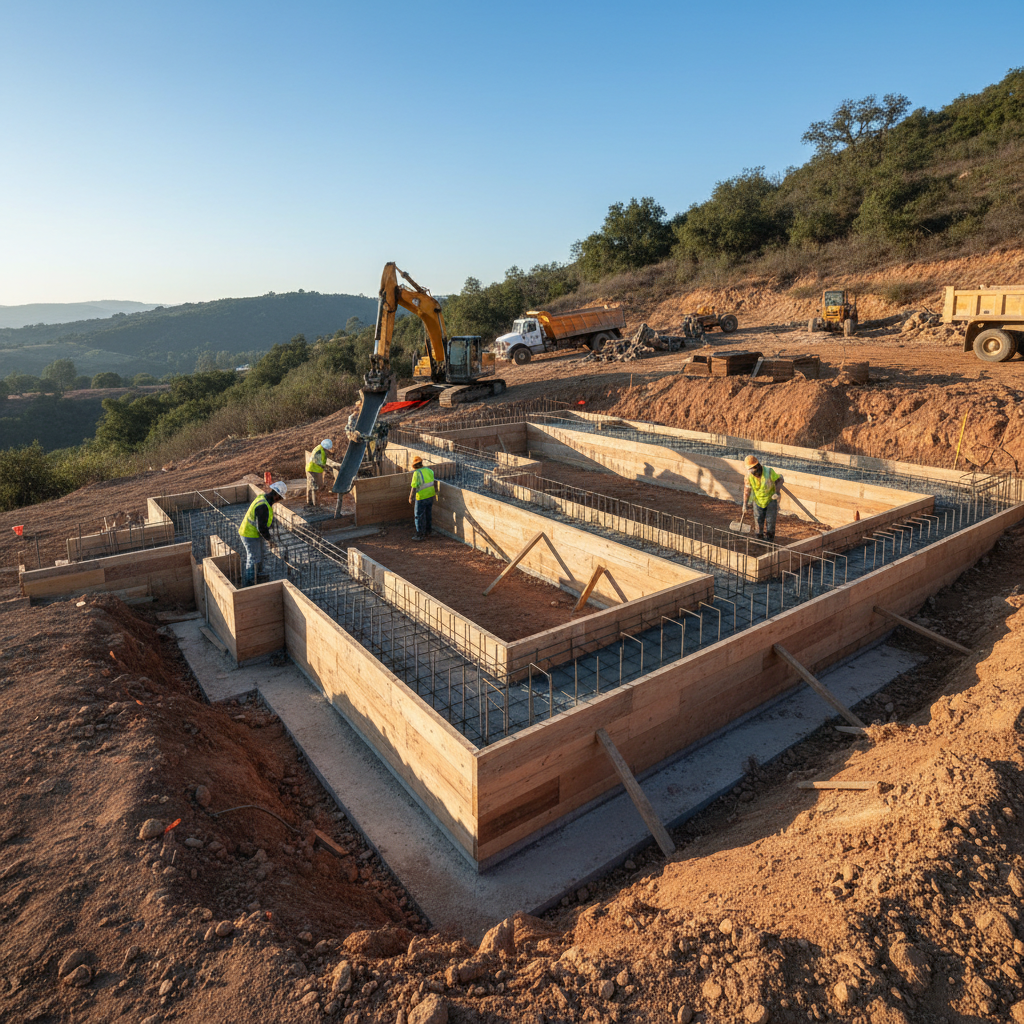
Building on a sloped property significantly increases the risk of soil instability, erosion, and landslides. A geotechnical report is almost always required to assess slope stability, recommend grading plans, and design retaining walls or other earth retention systems.
2. Proximity to Fault Lines or Seismic Zones
California sits on numerous active fault lines. If your property is located within a designated Alquist-Priolo Earthquake Fault Zone or an area with high seismic hazard potential (e.g., liquefaction zones, landslide zones as identified by the California Geological Survey), a geotechnical report will be mandatory to evaluate these risks and provide seismic design recommendations.
3. Known Unstable Soil Conditions
Certain soil types pose inherent challenges:
- Expansive Soils: These soils (often clay-rich) swell when wet and shrink when dry, causing significant stress on foundations. A report identifies their presence and recommends mitigation.
- Collapsible Soils: Soils that lose significant volume when saturated, leading to sudden settlement.
- Liquefaction Potential: Loose, saturated sandy soils can lose strength and behave like a liquid during an earthquake. This is a critical concern in many coastal and valley areas of California.
- Uncontrolled or Deep Fill: If your property contains uncompacted or poorly compacted fill material, especially deep fill, a geotechnical investigation is crucial to determine its suitability for supporting a structure.
4. High Groundwater Tables
A high water table can lead to hydrostatic pressure on foundations, introduce moisture issues, and affect soil bearing capacity. The report will assess groundwater levels and recommend drainage or waterproofing solutions.
5. Complex Foundation Designs or Multi-Story ADUs
While many ADUs are single-story, if your project involves a two-story ADU, a basement, or a particularly heavy or complex foundation system, a geotechnical report provides the detailed soil parameters necessary for safe and efficient design.
6. Local Jurisdiction Requirements
Many cities and counties in California have specific overlays or ordinances that mandate geotechnical reports for all new construction, including ADUs, within certain zones (e.g., hillside areas, flood plains, designated hazard zones). Always check with your local planning and building department.
7. Building Official Discretion
Ultimately, the final decision often rests with the local building official. If they observe any site conditions during their review that raise concerns about soil stability or geological hazards, they can request a geotechnical report, even if not explicitly required by general ordinances.
Understanding these triggers early in your ADU planning process can save you considerable time and frustration. If you're unsure whether your property falls into one of these categories, it's always best to consult with ADU experts. Book a free ADU consultation with GatherADU to discuss your specific site and project needs.
What Does an ADU Geotechnical Report Cover?
A comprehensive geotechnical report is a detailed document typically prepared by a licensed Geotechnical Engineer. It synthesizes field observations, laboratory test results, and engineering analysis to provide specific recommendations for your ADU's foundation design and site preparation. While the exact contents can vary, a typical report will include:
1. Executive Summary
A concise overview of the findings, conclusions, and key recommendations.
2. Site Description and Proposed Development
Details about the project location, existing site conditions, topography, and the planned ADU structure.
3. Subsurface Investigation Methodology
A description of how the investigation was conducted, including:
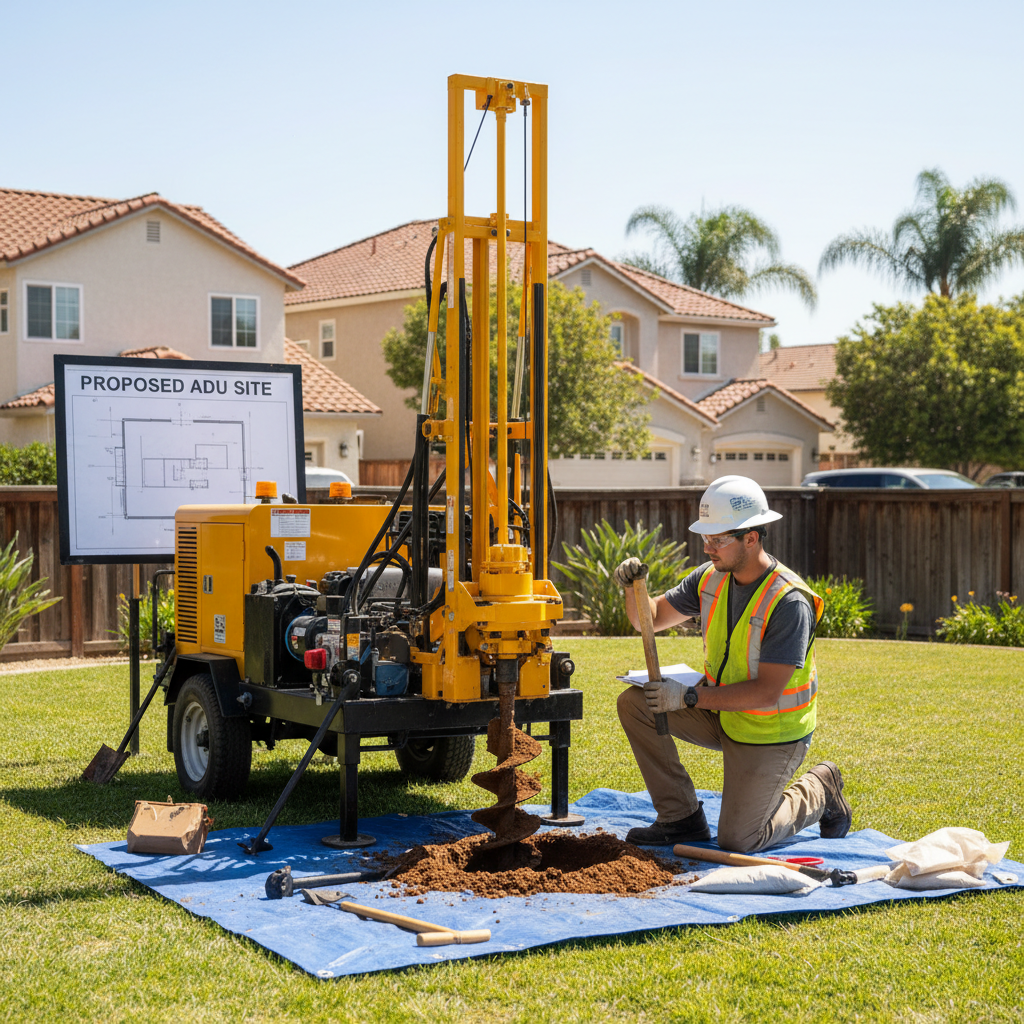
- Boring Logs: Detailed records from soil borings (drilled holes) or test pits, showing the types of soil and rock encountered at various depths, groundwater levels, and any unusual conditions.
- Sampling Procedures: How soil and rock samples were collected for laboratory testing.
4. Laboratory Testing Results
Analysis of soil and rock samples to determine their engineering properties, such as:
- Soil Classification: Identifying soil types (e.g., sand, clay, silt).
- Moisture Content & Density: Crucial for understanding compaction and stability.
- Bearing Capacity: The maximum load the soil can support without excessive settlement.
- Expansion/Shrink-Swell Potential: For expansive clays.
- Shear Strength: The soil's resistance to deformation.
- Corrosion Potential: How aggressive the soil might be to concrete or metal foundations.
5. Geologic Hazards Evaluation
Assessment of potential natural hazards affecting the site, including:
- Seismic Hazards: Evaluation of earthquake potential, ground shaking, liquefaction, and seismic settlement.
- Landslide Potential: Assessment of slope stability.
- Faulting: Proximity to active faults.
- Erosion: Risk of soil loss due to wind or water.
6. Groundwater Conditions
Information on the depth of the water table and its potential impact on construction and long-term performance.
7. Geotechnical Recommendations
This is the most critical section, providing actionable advice for the project. It includes recommendations for:
- Foundation Design: Specific type (e.g., shallow spread footings, mat foundation, deep piles/piers) and dimensions, allowable bearing pressures, and reinforcement details.
- Seismic Design Parameters: Site-specific factors for earthquake-resistant design.
- Earthwork & Grading: Procedures for excavation, compaction, and fill placement.
- Drainage & Waterproofing: Recommendations to manage surface and subsurface water.
- Retaining Walls: Design criteria for any necessary retaining structures.
- Slab-on-Grade Design: Reinforcement, vapor barriers, and detailing for concrete slabs.
- Special Considerations: Any unique challenges or requirements for the site.

The Geotechnical Investigation Process
Obtaining an ADU geotechnical report typically involves several steps:
- Initial Consultation: You or your ADU builder (like GatherADU) will engage a licensed geotechnical engineering firm.
- Site Reconnaissance & Research: The engineer reviews existing geological maps, historical data, and performs a site visit to assess visible conditions.
- Subsurface Exploration: This involves drilling boreholes or excavating test pits on your property to extract soil and rock samples at various depths. This is often done with specialized equipment, like a small drill rig.
- Laboratory Testing: Samples are sent to a lab for detailed analysis to determine their physical and engineering properties.
- Engineering Analysis: The geotechnical engineer interprets all the data, performs calculations, and evaluates potential risks.
- Report Preparation: A comprehensive report is drafted, outlining findings, conclusions, and specific recommendations for your ADU project.
- Review & Coordination: The report is then provided to your structural engineer and architect, who will incorporate its recommendations into the ADU's design plans.
Cost and Timeline Considerations for an ADU Geotechnical Report
The cost and timeline for an ADU geotechnical report can vary significantly based on the complexity of your site and the extent of the investigation required. Factors influencing cost include:
- Site Size & Complexity: Larger or more challenging sites (steep slopes, known hazards) will require more extensive investigation.
- Number of Borings: More borings mean more fieldwork.
- Laboratory Testing: The type and number of tests performed.
- Geographic Location: Costs can vary by region within California.
Generally, you can expect an ADU geotechnical report to range from $3,000 to $8,000+. For very complex sites or large ADUs, it could be higher. The timeline for completing a report typically ranges from 3 to 6 weeks, including fieldwork, lab testing, and report generation. It's crucial to factor this into your overall ADU project schedule.
While this might seem like a substantial upfront investment, consider it an insurance policy for your ADU. Avoiding future structural issues, permitting delays, or even catastrophic failures will undoubtedly save you more than the cost of the report.
Navigating Geotechnical Requirements with GatherADU
The process of determining if an ADU geotechnical report is needed, and then coordinating its completion, can feel daunting. This is where GatherADU's expertise becomes invaluable. As a leading ADU design and build company in California, we:
- Perform Initial Site Assessments: We help identify potential triggers for a geotechnical report early in your project's feasibility phase.
- Connect You with Qualified Professionals: We have established relationships with reputable, licensed geotechnical engineers who understand ADU-specific requirements.
- Integrate Findings Seamlessly: We ensure that the recommendations from the geotechnical report are correctly incorporated into your ADU's architectural and structural designs, ensuring compliance and safety.
- Streamline the Permitting Process: By proactively addressing geotechnical requirements, we help avoid delays during permit submission and review.
Our goal is to make your ADU journey as smooth and predictable as possible, handling the technical complexities so you can focus on the excitement of your new backyard home. Don't let the technical details hold you back; let us guide you through every step.
Conclusion
An ADU geotechnical report is a critical component for many Accessory Dwelling Unit projects in California, particularly those on challenging sites or in seismically active areas. It's an investment in safety, structural integrity, and regulatory compliance that ultimately protects your property and your peace of mind. By understanding when it's required and what it entails, you can approach your ADU project with confidence and clarity.
Ready to build a safe, compliant, and beautiful ADU? Let GatherADU be your trusted partner. Our team of experts is here to navigate every aspect of your project, from initial site evaluation to final construction, ensuring all necessary reports and permits are handled efficiently. Schedule your free ADU consultation today and take the first step towards realizing your ADU dream.