In the world of Accessory Dwelling Units (ADUs), every square foot is a precious commodity. Homeowners and renters alike are seeking innovative solutions to maximize living space without sacrificing functionality or style. One of the most ingenious and practical furniture pieces for compact living is the fold-down table ADU – a versatile marvel that can transform a small dining area, workspace, or even an entryway in an instant.
But what exactly is a fold-down table, and how does it work to revolutionize the dining experience in your small ADU? At GatherADU, we understand the nuances of designing efficient and comfortable small homes. Let's delve into the mechanics, benefits, and design possibilities of these clever tables, ensuring your ADU feels spacious and functional.
What is a Fold-Down Table?
At its core, a fold-down table is a piece of furniture designed to be easily stored or collapsed when not in use, freeing up valuable floor space. Unlike traditional static tables, these units are typically hinged, allowing them to be folded against a wall, tucked into a cabinet, or reduced in size. This adaptability makes them ideal for environments where space is limited, such as apartments, tiny homes, and, of course, ADUs.
The concept is simple yet powerful: a table surface that can be present when needed and virtually disappear when not. This mechanism is primarily achieved through various hinge systems and support structures that enable the table to pivot, slide, or retract.
How Does a Fold-Down Table Work? The Mechanics Explained
While designs vary, the fundamental operation of a fold-down table relies on a few key components:
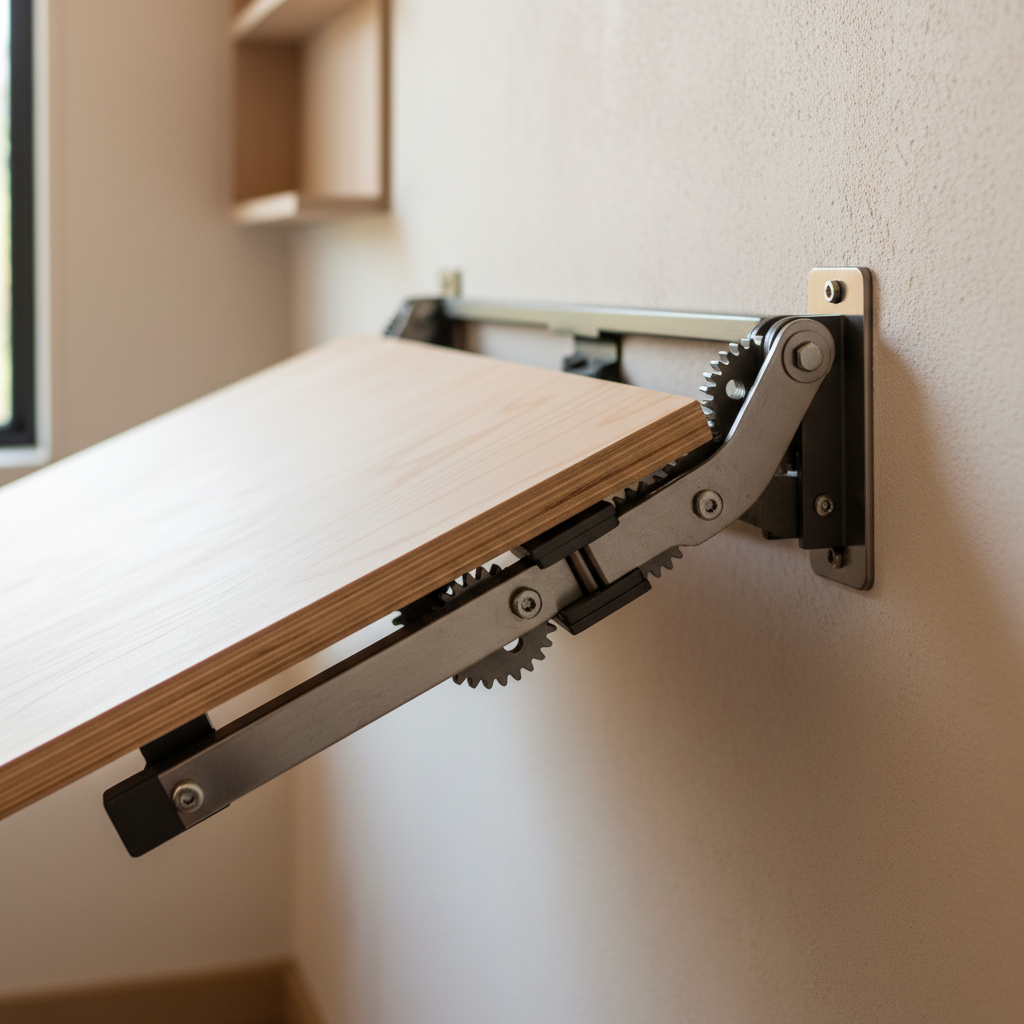
- Hinges: These are the backbone of any fold-down mechanism. Wall-mounted tables often use heavy-duty piano hinges or butt hinges to secure the table surface to a wall bracket. Drop-leaf tables use specialized hinges that allow sections of the tabletop to fold down.
- Support Brackets/Legs: For tables that fold flat against a wall, sturdy brackets (like folding shelf brackets or cantilever supports) extend to hold the table surface horizontally when in use. Some designs incorporate collapsible legs that fold neatly into the table's underside.
- Locking Mechanisms: To ensure stability and safety, many fold-down tables feature locking pins, latches, or friction stays that secure the table in its open position.
- Release Mechanism: A simple lever, button, or unlatching action allows the user to release the table from its locked position and fold it away.
The magic lies in the seamless transition from a compact, unobtrusive unit to a fully functional surface, ready for dining, working, or crafting.
Why an ADU Needs a Fold-Down Table: The Ultimate Space Saver
For an ADU, where efficient design is paramount, a fold-down table is more than just a convenience; it's a strategic design choice that unlocks greater living potential.
Maximizing Limited Square Footage
The most obvious benefit is space optimization. In an ADU, a dedicated dining room is often out of the question. A fold-down table allows you to have a dining area only when you need it, instantly creating open floor space for other activities, like exercising, entertaining, or simply moving around more freely. Imagine converting your dining nook into a yoga studio or a play area for grandchildren in a matter of seconds!
Multifunctionality at Its Best
ADUs thrive on multi-purpose furniture, and a fold-down table is a prime example. Beyond dining, it can serve as:
- A Home Office Desk: Perfect for remote work or studying.
- A Crafting Station: Ideal for hobbies that require a flat surface.
- An Extra Prep Area: In a small kitchen, it can extend countertop space.
- A Server/Bar Cart: For entertaining guests.
This versatility means you get more utility from a single piece of furniture, reducing clutter and the need for multiple items.
Enhanced Aesthetics and Flow
A static, bulky table can make a small ADU feel cramped and visually cluttered. A fold-down table, by disappearing when not in use, contributes to a cleaner, more expansive aesthetic. It promotes a sense of openness and allows for better flow through the living space, making the ADU feel larger and more inviting.
Ready to explore how these ingenious solutions can be integrated into your own backyard home? Book a free ADU consultation with GatherADU to discuss your design aspirations and discover the possibilities.
Types of Fold-Down Tables Perfect for ADUs
While the basic concept remains, fold-down tables come in various forms, each suited to different needs and design preferences:
1. Wall-Mounted Fold-Down Tables
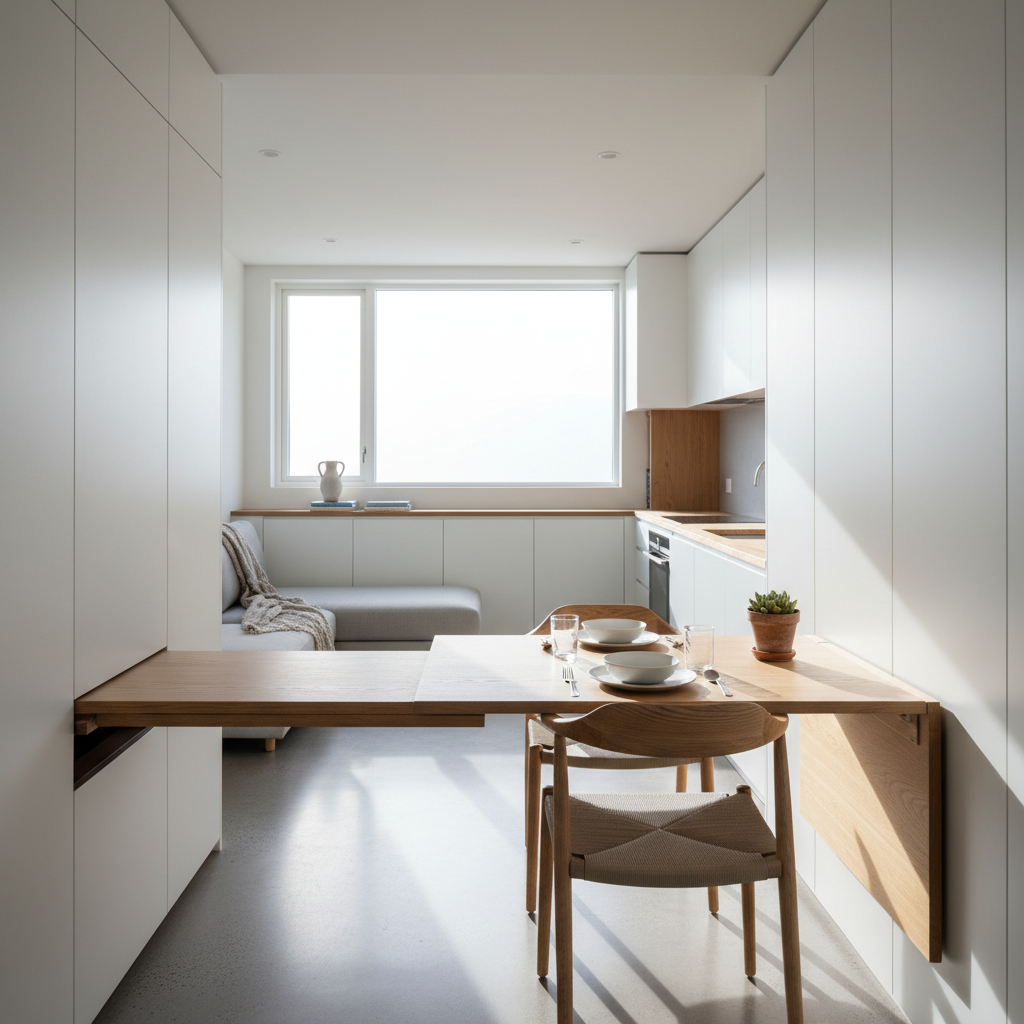
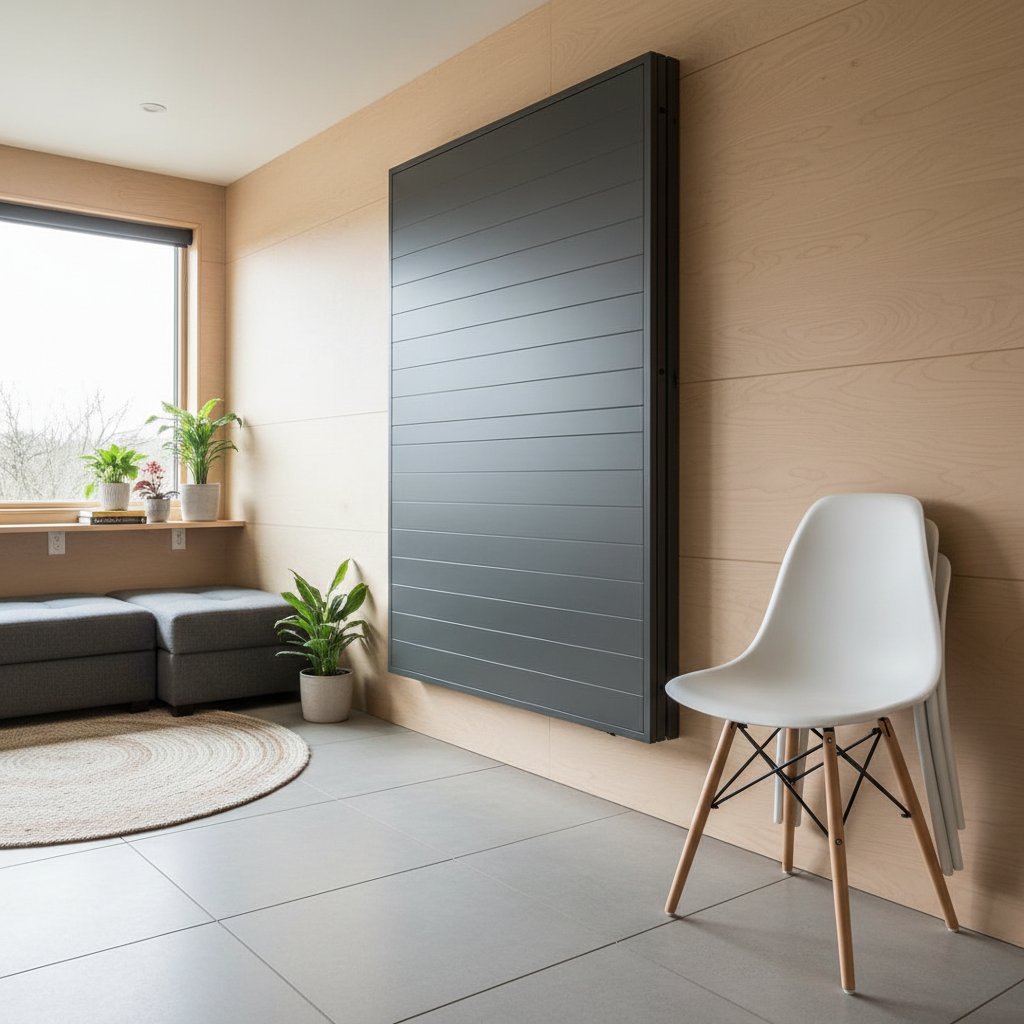
These are perhaps the most common type for ADUs. They are directly attached to a wall with a hinge mechanism. When not in use, the tabletop folds flat against the wall, often appearing as a slim panel or even blending into wall paneling. When needed, it folds down and is supported by sturdy brackets or legs.
- Pros: Maximizes floor space, very stable when open, can be custom-built to match decor.
- Cons: Fixed location, requires clear wall space.
2. Drop-Leaf Tables
A classic design, drop-leaf tables have one or two hinged sections on the sides that can be folded down to reduce the table's overall size. The central section remains static. These can be freestanding or wall-mounted.
- Pros: Offers adjustable size, often provides some storage in the base, versatile.
- Cons: May still take up some floor space even when leaves are down, mechanism can sometimes be less seamless.
3. Console-to-Dining Tables
These innovative tables appear as slim console tables when collapsed but can extend, often with multiple leaves or telescoping mechanisms, to become a full-sized dining table. They are freestanding and offer a surprising amount of seating when fully extended.
- Pros: Highly adaptable, great for entertaining, serves as an attractive console when collapsed.
- Cons: Can be heavier and more complex, generally more expensive.
4. Hidden or Integrated Tables
The most seamless options are tables that are fully integrated into other furniture pieces or cabinetry. For example, a table might slide out from beneath a countertop, pull out from a drawer, or pivot out from a shelving unit. These are often custom solutions tailored to the ADU's specific layout.
- Pros: Virtually invisible when not in use, custom fit, ultimate space-saving.
- Cons: Requires custom cabinetry, potentially higher cost, can be more complex to install.
Key Considerations When Choosing a Fold-Down Table for Your ADU
Selecting the right fold-down table involves more than just picking a style. Consider these factors:
Size and Seating Capacity
How many people do you typically need to seat? A table for two will be much smaller than one designed for four or six. Measure your available wall space and consider the table's footprint both when open and closed.
Material and Durability
ADUs, like any home, need durable furniture. Common materials include solid wood, engineered wood (MDF with veneer), metal, and even some composites. Choose a material that can withstand daily use and matches your ADU's interior aesthetic. Consider resistance to scratches and moisture, especially if it's near a kitchen.
Installation and Stability
For wall-mounted units, proper installation into wall studs is crucial for safety and stability. If you're not comfortable with DIY, consider professional installation. Ensure the table feels sturdy when open and can safely support its intended load.
Design Aesthetics and Integration
Your fold-down table should complement the overall design of your ADU. Does it blend in seamlessly when folded? Does its material and finish match other elements in the room? Many modern fold-down tables are designed to be visually appealing even when closed, sometimes featuring a decorative panel.
Budget
Prices can range widely depending on material, mechanism complexity, and whether it's a custom-built piece. Set a budget and explore options that offer the best balance of quality and cost.
Installation and Safety Tips
For any wall-mounted fold-down table ADU, safety is paramount. Always:
- Locate Wall Studs: Use a stud finder to ensure the mounting brackets are securely fastened into solid wood studs, not just drywall.
- Use Appropriate Hardware: Employ screws and anchors rated for the weight of the table and any items placed on it.
- Follow Manufacturer Instructions: Adhere strictly to the installation guide provided by the manufacturer.
- Test Stability: Once installed, gently test the table's stability before regular use. Apply downward pressure to ensure it holds firm.
- Consider Professional Installation: If you're unsure, hiring a handyman or carpenter is a worthwhile investment for peace of mind.
Designing Your ADU Dining Area with a Fold-Down Table
Integrating a fold-down table effectively into your ADU's design goes beyond just mounting it on a wall. Think about the surrounding elements:
Seating Solutions
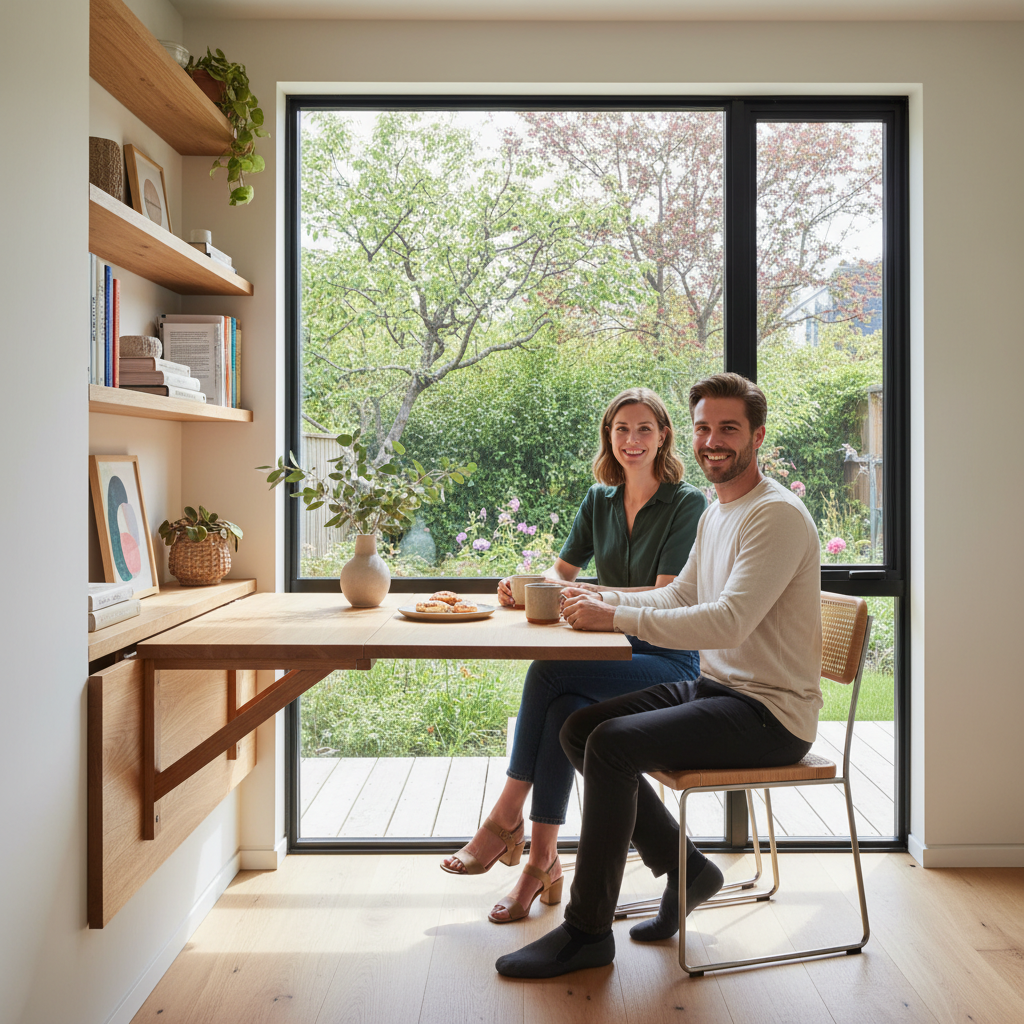
Pair your fold-down table with equally space-efficient seating. Stackable chairs, folding chairs, or compact stools that can be tucked away under the table or into a corner are excellent choices. Built-in bench seating along a wall can also work beautifully, providing permanent seating on one side while the table unfolds.
Lighting
Ensure adequate lighting for your dining area. A pendant light that hangs above the table when it's open, or adjustable wall sconces, can define the space and make it feel intentional. When the table is closed, these lights can simply illuminate the general living area.
Wall Decor and Storage
The wall behind your fold-down table can be utilized for more than just mounting. Consider open shelving for decorative items or functional storage, or even a piece of art that becomes a backdrop for your dining experience. When the table is folded, this wall art or shelving becomes the focal point, enhancing the room's aesthetic.
Crafting an ADU that perfectly balances style, comfort, and functionality requires expert insight. Get your free project estimate from GatherADU and let our team help you design an ADU that truly maximizes every inch.
Maintenance and Longevity
To ensure your fold-down table remains functional and beautiful for years, follow simple maintenance practices:
- Regular Cleaning: Wipe down the surface with appropriate cleaners based on the material.
- Check Mechanisms: Periodically inspect hinges, brackets, and locking mechanisms for any signs of wear or loosening. Tighten screws if necessary.
- Lubricate (if applicable): For metal mechanisms, a light lubrication might be beneficial to keep them operating smoothly.
- Avoid Overloading: Adhere to the manufacturer's weight limit to prevent damage or safety hazards.
Conclusion: Unlocking the Potential of Your Small ADU Dining Area
A fold-down table ADU is more than just a piece of furniture; it's a testament to clever design and an essential component for maximizing space in any compact living environment. By understanding their mechanics, exploring the various types, and considering key design factors, you can seamlessly integrate one of these versatile tables into your Accessory Dwelling Unit, transforming a small nook into a dynamic dining area, workspace, or whatever your lifestyle demands.
At GatherADU, we specialize in creating ADUs that are not only beautiful but also supremely functional and tailored to your unique needs. Let us help you unlock the full potential of your backyard home, from smart space-saving solutions like fold-down tables to comprehensive design and build services. Don't let limited space limit your dreams. Schedule your free ADU consultation today and start planning your perfect, space-efficient ADU!