California's architectural heritage owes much to Spanish Colonial and Spanish Revival styles. White stucco walls, red tile roofs, arched doorways, and interior courtyards define neighborhoods from San Diego to Santa Barbara. When building an ADU on a property with this heritage, or when you simply love the aesthetic, Spanish-style design creates a backyard dwelling that feels rooted and authentic.
Beyond aesthetics, Spanish design elements are practical for California's climate. Thick walls, covered outdoor spaces, and natural ventilation strategies developed over centuries of building in warm, sunny regions.
Defining Elements of Spanish-Style Architecture
The Roof
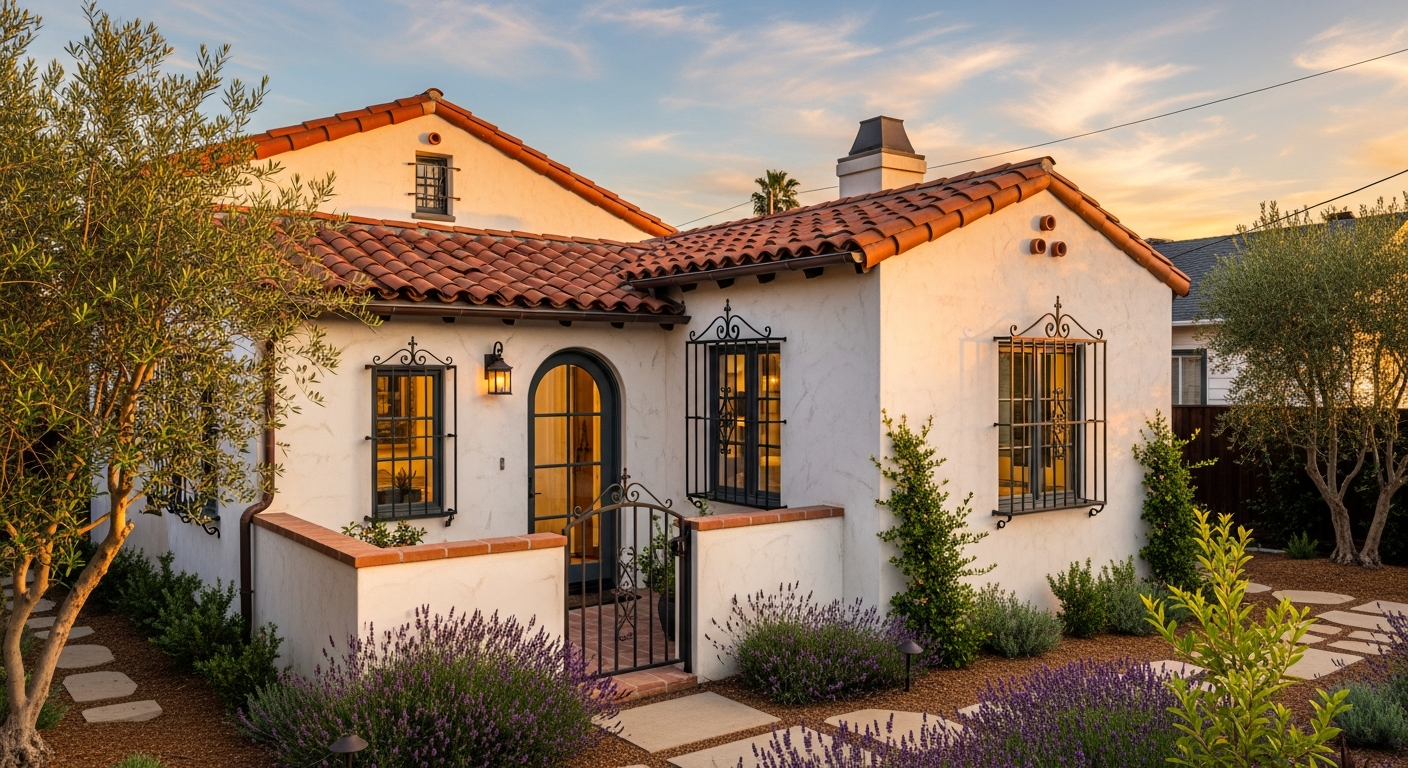
Nothing says Spanish Colonial like a terra cotta tile roof. These barrel-shaped or S-shaped clay tiles have been made for centuries and remain the gold standard for authentic Spanish style. Modern concrete tiles can mimic the look at lower cost, and some homeowners prefer them for reduced maintenance, but purists opt for genuine clay.
Roof pitches in Spanish design are typically low to moderate, often 4:12 to 6:12. Flat roofs with parapets appear in some interpretations, particularly in regions influenced by pueblo architecture.
Exposed rafter tails extending beyond the roofline add character and provide modest overhangs that shade walls and windows.
Exterior Walls
Stucco is the traditional wall finish, applied in smooth or lightly textured coats over concrete, block, or wood-frame construction. Colors range from brilliant white to warm creams, soft yellows, and terra cotta tones.
Wall thickness is often emphasized in Spanish design. Deep window reveals, thick door jambs, and buttress-like wall projections suggest the substantial construction of historical buildings, even if modern stud framing hides beneath the stucco.
Arches and Openings
Arched openings are a signature element. Entry doors, covered porches, windows, and interior passages all provide opportunities for curved tops. The arches might be full semicircles, segmental arcs, or more exotic Moorish-influenced horseshoe shapes.
Grilles of decorative ironwork often protect windows or span arched openings. These rejas serve both security and aesthetic purposes and can be quite elaborate.
Wood Elements
Exposed wood beams, corbels, and posts provide rustic warmth against smooth stucco walls. Traditional construction used heavy timbers, often rough-hewn and naturally weathered. Modern interpretations might use engineered beams with distressed finishes to achieve a similar look.
Wooden doors, often planked with decorative iron hardware, serve as focal points at main entrances. Window shutters and balcony railings offer additional opportunities for wood detailing.
Tile and Ornament
Decorative tile appears as accent panels, stair risers, fountain basins, and countertops. Talavera tiles from Mexico, with their vibrant blue, yellow, and orange patterns, are classic choices. Encaustic cement tiles provide another traditional option with geometric patterns.
Other ornamental elements include carved stone surrounds at doors and windows, decorative vents, and sculptural details like finials and medallions.
Designing a Spanish-Style ADU
Creating an authentic Spanish-style ADU requires attention to proportions, materials, and details. Here's how to approach key aspects:
Massing and Form
Spanish buildings often read as simple volumes with additive elements. A primary rectangular mass might have a smaller wing attached, a covered porch extending from one side, or a tower element at a corner. This approach creates visual interest without the symmetry of more formal styles.
For an ADU, you might express this through a main living/sleeping volume with an entry alcove, a projecting bay for the kitchen, or a pergola-covered outdoor space that extends the form.
Entry Sequence
Spanish architecture traditionally creates a transition from public to private space. A gate or archway leads to a courtyard or covered entry porch, then to the front door. This layered approach provides privacy and creates a sense of arrival.
For an ADU, consider how the tenant approaches the entry. A small garden gate, a planted pathway, and a recessed entry with its own roof covering can create this traditional sequence on a modest scale.
Indoor-Outdoor Connection
Spanish design embraces outdoor living. Covered porches, loggias, and courtyards extend living space outdoors while providing shade and protection from weather.
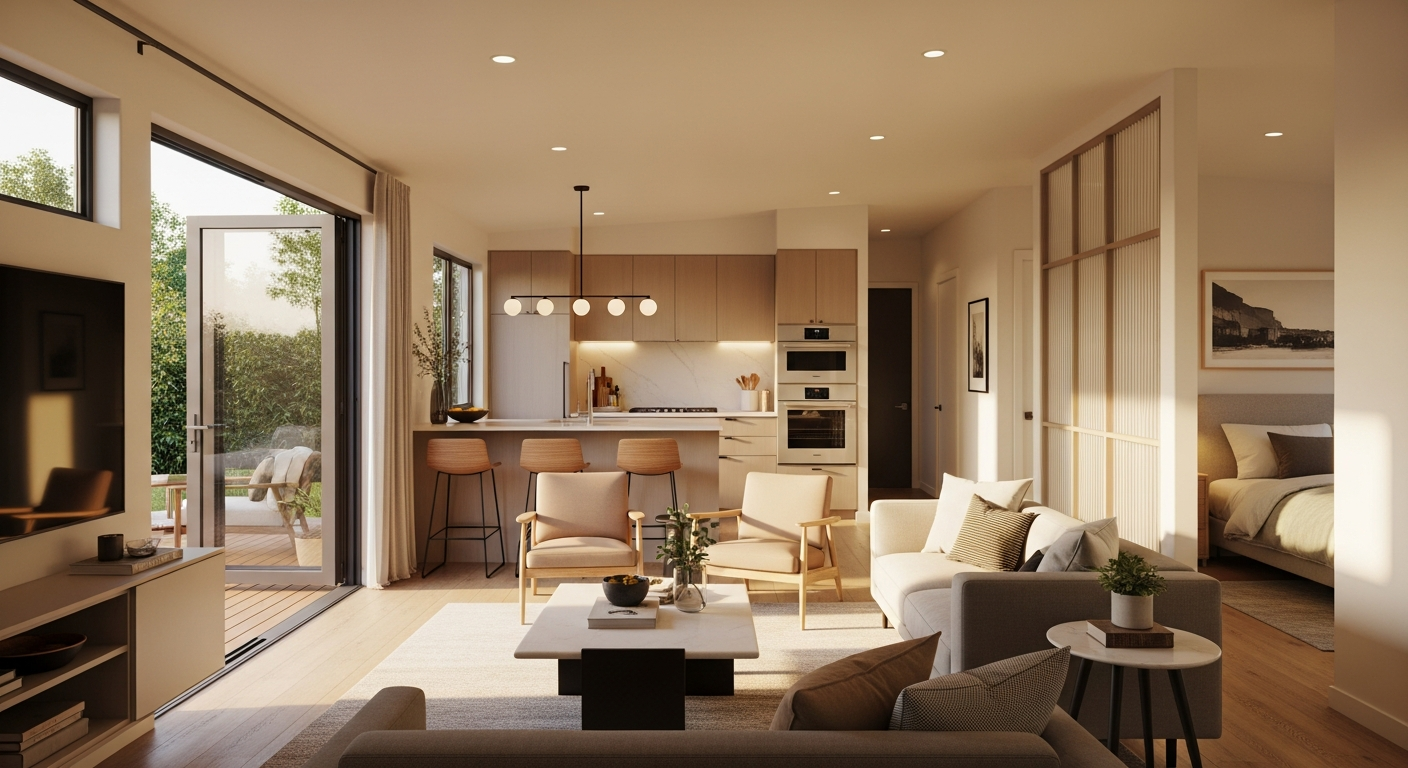
An ADU might include a small covered patio with arched openings, a pergola with climbing vines, or at minimum, French doors that open to a garden area. These elements are both authentic to the style and highly desirable for California living.
Window Placement
Windows in Spanish buildings tend to be smaller than in modern construction, set deeply into thick walls. This reduces solar heat gain while creating dramatic interior light patterns.
Modern energy codes require certain window areas for natural light and ventilation, so you can't go too minimal. But grouping smaller windows rather than using fewer large expanses stays truer to the style.
Interior Design Elements
Inside a Spanish-style ADU, you might include:
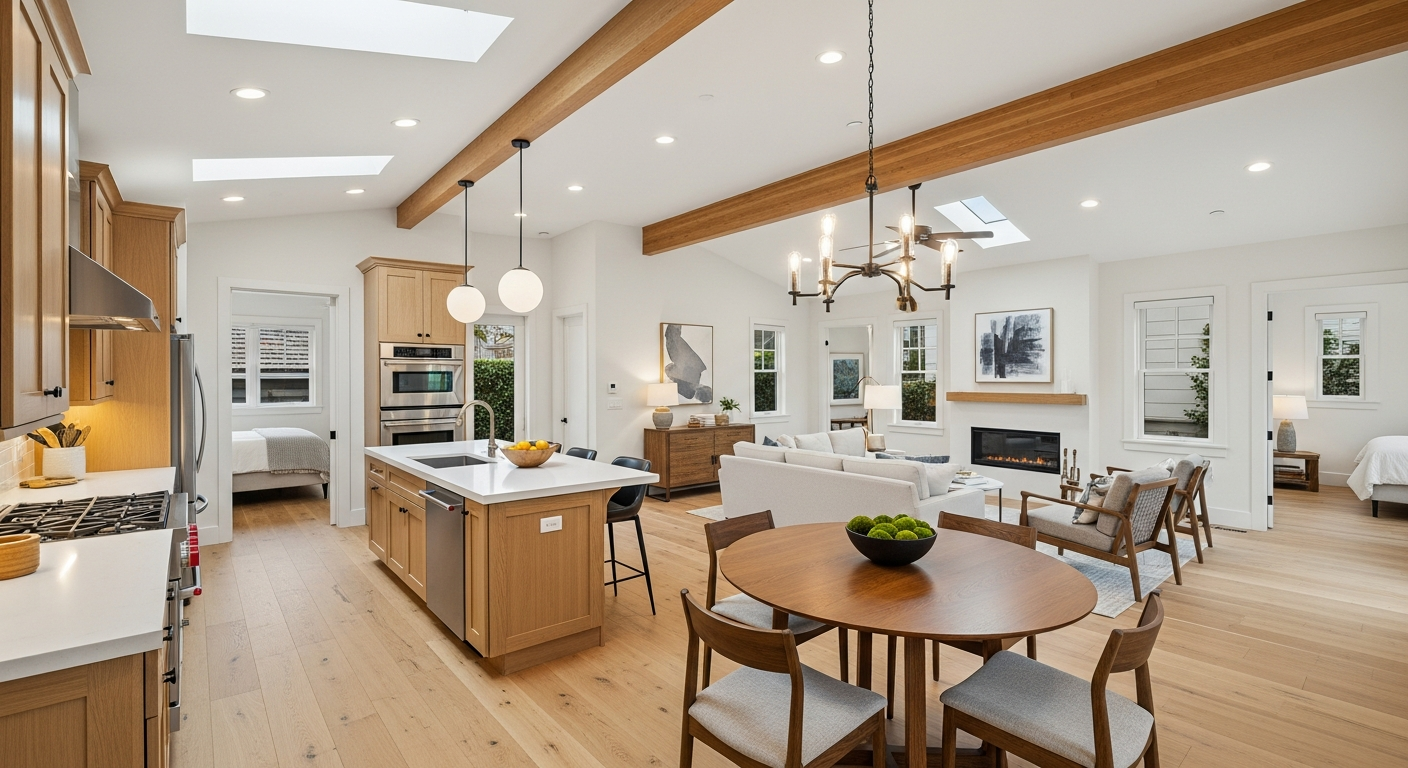
Beamed ceilings: Exposed wood beams, whether structural or decorative, add warmth and character. The space between beams might be planked wood or smooth plaster.
Tile floors: Saltillo tile (Mexican terra cotta) or decorative patterned tiles work beautifully. Modern alternatives include luxury vinyl that mimics tile looks with easier maintenance.
Plaster walls: Smooth or lightly textured plaster in warm white tones creates authentic surfaces. Skip-trowel or knockdown textures approximate the look with modern drywall.
Arched doorways: Interior arches between rooms continue the exterior vocabulary inside.
Iron fixtures: Light fixtures, cabinet hardware, and decorative elements in black iron complement the style.
Nicho shelving: Small arched niches set into walls provide display space and architectural interest.
Matching Your Main House
If your main house is Spanish style, your ADU should harmonize with it. This doesn't mean exact replication, but the ADU should feel like part of the same property.
Match key elements:
- Same or complementary stucco color
- Same roof tile type and color
- Similar window proportions and trim details
- Consistent door and hardware styles
Smaller scale is appropriate for the ADU. The main house should read as primary, with the ADU as a subordinate building. Lower roofline, smaller footprint, and simpler detailing help establish this relationship.

Costs and Considerations
Spanish-style ADUs typically cost 10% to 20% more than basic contemporary construction due to:
- Clay tile roofing costs more than asphalt shingles or standing seam metal
- Multi-coat stucco application requires more labor than simpler siding
- Arched openings require specialized framing and finishing
- Custom ironwork, decorative tile, and wood elements add material and installation costs
These premiums are manageable and often worthwhile for homeowners who value authentic design. The style also has good resale appeal in many California neighborhoods, potentially returning the investment when you sell.
Some costs can be managed through selective use of premium elements. Perhaps you use authentic clay tile on the main roof but simpler materials on less visible areas. Maybe you splurge on a beautiful custom entry door but use more standard windows. Prioritize visible, high-impact elements.
Dream of a Spanish-Style ADU?
We can help you design an ADU that captures Old California charm while meeting modern living requirements.
Call us at (323) 591-3717 or schedule a free consultation to explore design possibilities.
Making It Work
A Spanish-style ADU isn't just about aesthetics. The design principles offer practical benefits for California living:
- Thick walls and small windows reduce cooling loads
- Covered outdoor spaces extend living area without adding interior square footage
- Natural materials age gracefully and require less maintenance than some modern alternatives
- The style never goes out of fashion in California
Whether you're honoring your existing home's character or simply love the look, Spanish-style ADU design connects your new building to centuries of architectural tradition while creating comfortable, appealing living space.
Sources cited:
- Weitze, Karen. "California's Mission Revival." Los Angeles Conservancy, 2021.
- Winter, Robert. "The California Bungalow and Spanish Colonial Revival." Gibbs Smith, 2019.