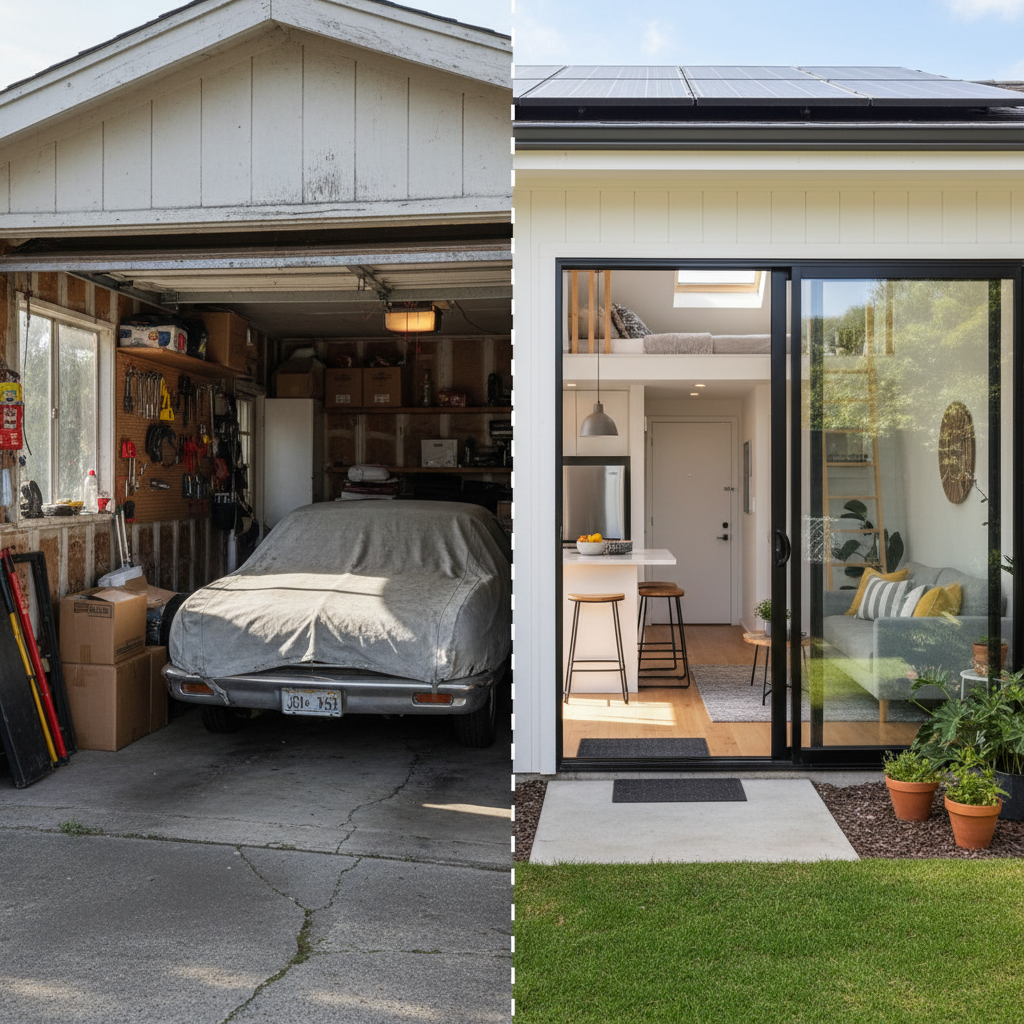

California's housing crisis has made Accessory Dwelling Units (ADUs), often called backyard homes or granny flats, a crucial solution for increasing housing supply and providing flexible living options. However, for many homeowners, the journey to building an ADU can seem daunting, primarily due to the complex web of regulations. At the heart of this complexity lies the interplay between overarching state laws and specific local ADU ordinances.
Understanding what a local ADU ordinance is and how it interacts with state law in California is not just a matter of compliance; it's key to unlocking your property's full potential. This article will demystify these regulations, explaining their purpose, their relationship, and how they collectively shape your ADU project.
The Foundation: California's State ADU Laws
To address the severe housing shortage, California has progressively streamlined ADU development through a series of landmark state laws. These laws aim to remove historical barriers and encourage homeowners to build ADUs by standardizing key requirements and limiting local discretion.
Key Provisions of State ADU Laws:
- Mandatory Approval: Local agencies must approve ADU projects that meet state and local standards ministerially, meaning without discretionary review or public hearings. This significantly reduces permitting time and uncertainty.
- Reduced Setbacks: State law limits minimum setbacks for ADUs, often to 4 feet from side and rear property lines, making it easier to fit ADUs on smaller lots.
- Size Limits: State law generally allows ADUs up to 800 square feet for a JADU (Junior ADU), and up to 1,200 square feet for a detached ADU, or 850/1,000 square feet for attached ADUs (1 or 2+ bedrooms, respectively), regardless of local zoning.
- Parking Exemptions: Many ADUs are exempt from parking requirements, especially those located within a half-mile of public transit, part of an existing primary residence, or in historic districts.
- Owner-Occupancy: State law removed owner-occupancy requirements for ADUs permitted between 2020 and 2025, offering greater flexibility for landlords.
- Fire Sprinklers: ADUs are generally not required to have fire sprinklers if the primary residence does not.
- Impact Fees: Fees for ADUs under 750 square feet are prohibited. For larger ADUs, impact fees must be proportional to the square footage of the primary dwelling unit.
These state laws (such as AB 68, AB 881, SB 13, and AB 1033 more recently) act as a statewide baseline, ensuring that every city and county in California facilitates ADU development to a certain degree. They are designed to override overly restrictive local rules that previously stifled ADU construction.
Understanding Your Local ADU Ordinance
While state law sets the foundation, a local ADU ordinance is the specific set of rules adopted by your city or county to govern ADU construction within its jurisdiction. These ordinances are designed to implement state law while also addressing unique local conditions, community character, and planning goals.
Think of it this way: State law says, "You must allow ADUs and here are the minimum standards." Your local ADU ordinance then says, "Here's how we're going to implement that, with these specific local details, as long as they don't violate state law."
What Local Ordinances Typically Cover:
- Specific Design Standards: While state law prevents overly burdensome design requirements, local ordinances can establish objective design standards related to architectural style, materials, colors, roof pitch, and window placement to ensure compatibility with the neighborhood.
- Height Limits: Local ordinances often specify maximum heights for ADUs, which must still comply with state minimums (e.g., 16 feet for a detached ADU on a single-story home lot, 18 feet for a two-story home lot, or 25 feet/2 stories if within specific proximity to the primary residence).
- Lot Coverage: Rules on the maximum percentage of your lot that can be covered by structures.
- Specific Setback Rules: While state law provides minimums (4 ft side/rear), a local ordinance might allow for zero-foot setbacks in certain conversions (e.g., garage conversions).
- Utility Connections: Requirements for separate utility meters or shared connections.
- Historic Preservation: Stricter design review processes for properties in historic districts, though state law still limits the extent of these restrictions.
- JADU-Specific Rules: Additional details for Junior ADUs, such as internal access requirements or bathroom configurations.
The crucial point is that any local ADU ordinance cannot be more restrictive than state law unless specifically permitted by state statute. If a local rule conflicts with a state mandate, the state law generally takes precedence.

The Interplay: State Preemption vs. Local Discretion
The relationship between California's state ADU laws and local ADU ordinances is best understood as a hierarchy, with state law holding the ultimate authority. This concept is known as state preemption.
State Preemption:
State preemption means that the state government has the exclusive power to regulate certain matters, preventing local governments from passing conflicting or more restrictive laws. In the context of ADUs, state law sets a regulatory "floor" and often a "ceiling."
- The "Floor": State law ensures a minimum level of ADU permissibility. Localities cannot prohibit ADUs outright or impose standards that make them impossible to build (e.g., excessively large setbacks, impossible parking requirements).
- The "Ceiling": In many areas, state law also sets a maximum level of restriction. For example, a city cannot require a setback greater than 4 feet for a detached ADU unless it can prove a specific, identified public safety need, which is rare.
If a local ordinance is found to be more restrictive than state law without explicit state authorization, that part of the local ordinance is invalid, and the state standard applies. This is why many cities have had to amend their ADU ordinances repeatedly as state laws evolved.
Areas of Local Discretion (Within State Bounds):
Despite state preemption, local governments retain some flexibility to tailor ADU regulations to their specific communities. These areas of discretion must always align with the spirit and intent of state law.
- Objective Design Standards: Localities can implement objective design standards that promote aesthetic consistency without being subjective or prohibitive. For instance, requiring certain exterior materials or roof forms that are common in the neighborhood is generally acceptable, provided they don't significantly increase costs or complexity beyond reason.
- Maximum Unit Sizes: While state law sets minimums (e.g., must allow up to 800 sq ft for JADU, 1200 sq ft for detached ADU), local ordinances can permit larger ADUs if they choose, as long as it aligns with overall zoning and does not conflict with other state size limitations.
- Specific Environmental or Safety Regulations: In areas with unique environmental sensitivities (e.g., fire hazard zones, floodplains), local ordinances may impose additional safety or mitigation requirements, provided these are fact-based and demonstrably necessary.
- Fees: As mentioned, impact fees for larger ADUs can be levied, but they must be proportional and cannot be a barrier to construction.
The key takeaway is that local ordinances fill in the details where state law is silent or permits local variation, but they can never undermine the fundamental rights and flexibilities granted by state ADU legislation. Navigating this landscape requires careful review of both state statutes and your local jurisdiction's specific ordinance.
If these details seem overwhelming, remember that expert guidance can simplify the process. Schedule a free consultation with GatherADU to discuss your specific property and local requirements.

The Importance of Ministerial Review
One of the most significant aspects of state ADU law is the requirement for "ministerial approval." This means that if your ADU project complies with all applicable development standards (both state and local), the city or county planning department must approve it without discretionary review. There are no public hearings, no subjective judgments, and no opportunities for neighbors to block a conforming project.
This contrasts sharply with discretionary review, where projects can be denied based on subjective criteria or community opposition. Ministerial approval provides much-needed predictability and speed for homeowners, drastically reducing the time and uncertainty associated with the permitting process.
Why This Matters for California Homeowners
For any homeowner considering an ADU, understanding the interaction between state and local laws is paramount:
- Predictability: Knowing which rules apply and where state law overrides local ensures a more predictable permitting process.
- Maximizing Potential: Homeowners can advocate for their rights under state law if a local planner mistakenly applies a more restrictive local rule. This allows for larger, more flexible, or more numerous ADUs than a strictly local interpretation might suggest.
- Avoiding Delays & Costs: Correctly interpreting regulations from the outset prevents costly redesigns, application rejections, and protracted permitting timelines.
- Informed Decision-Making: Whether you're planning for rental income, multi-generational living, or a home office, understanding the rules helps you make informed decisions about your ADU's size, design, and feasibility.
While California's ADU laws have made building a backyard home more accessible than ever, the nuances between state and local regulations can still be tricky. Local ordinances evolve, and state laws are periodically updated. This dynamic environment underscores the value of staying informed and seeking professional assistance.
Ensuring your ADU plans are fully compliant from the start is crucial for a smooth build. For tailored advice on navigating your local ADU ordinance and state laws, get your free project estimate today.
Conclusion
California's state ADU laws have fundamentally reshaped the landscape for backyard homes, prioritizing housing production and homeowner flexibility. Local ADU ordinances then layer specific, permissible details onto this framework, adapting state mandates to the unique character of individual communities. The key to a successful ADU project lies in recognizing this hierarchy: state law sets the overarching rules, and local ordinances provide the specifics, always within the bounds of state preemption.
Navigating these regulations can be a complex endeavor, but with the right knowledge and expert guidance, homeowners can confidently plan and build an ADU that meets their needs and complies with all applicable laws. By understanding the interplay between state and local regulations, you empower yourself to make the most of your property and contribute to California's housing solution.
Ready to explore the possibilities for your property? Don't let regulatory complexities hold you back. Book a free ADU consultation with GatherADU today to get expert advice tailored to your specific location and project goals.