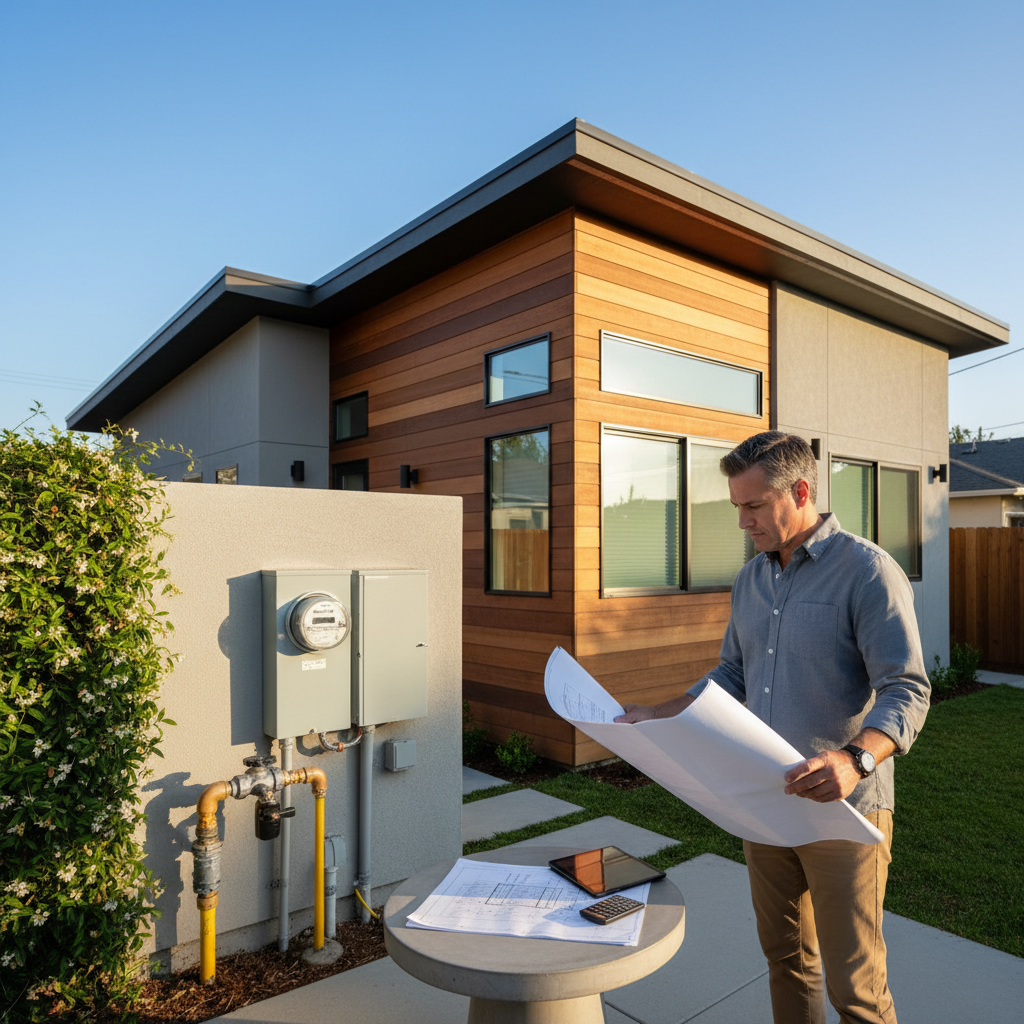

For years, homeowners in California considering building an Accessory Dwelling Unit (ADU), also known as a backyard home or granny flat, often faced a significant hurdle: the owner occupancy requirement. This rule mandated that the owner of the property live in either the primary residence or the ADU. While intended to ensure ADUs served as true extensions of owner-occupied homes, it inadvertently limited the flexibility and financial potential for many. That all changed with the introduction and passage of AB 976 ADU owner occupancy legislation. This landmark bill has reshaped the landscape for ADU development across the Golden State, opening up new opportunities for homeowners and investors alike.
Understanding AB 976 is crucial for anyone planning an ADU project in California. This comprehensive guide will delve into what the bill entails, how it specifically altered owner occupancy rules, and what these changes mean for you.
Understanding AB 976: A Legislative Landmark
California has been at the forefront of addressing its housing crisis through innovative legislative measures, and ADUs have emerged as a powerful tool in this effort. Over the past decade, a series of state laws have progressively streamlined the ADU development process, making it easier and more attractive for homeowners to build these valuable units.
The Evolution of ADU Laws in California
Prior to AB 976, earlier ADU legislation (such as SB 1069, AB 2299, SB 229, and AB 68) focused on reducing regulatory barriers like parking requirements, impact fees, and permitting timelines. These laws successfully spurred a significant increase in ADU construction. However, one persistent constraint was the owner occupancy requirement, which often dictated that if an ADU was built, the property owner had to reside on the premises, either in the main house or the ADU itself.
What Exactly Does AB 976 Do?
Signed into law by Governor Gavin Newsom in October 2019 and effective January 1, 2020, Assembly Bill 976 (AB 976) specifically targeted the owner occupancy requirement for ADUs. Its primary purpose was to remove this mandate, thereby increasing the flexibility for property owners to utilize their ADUs as rental income properties without the need to live on-site.
In essence, AB 976 permanently prohibits local agencies from imposing owner occupancy requirements on ADUs. This means that property owners can now rent out both their primary residence and their ADU, or rent out the ADU while living elsewhere, without violating state law. This change has profound implications for how ADUs are viewed and utilized in California's housing market.
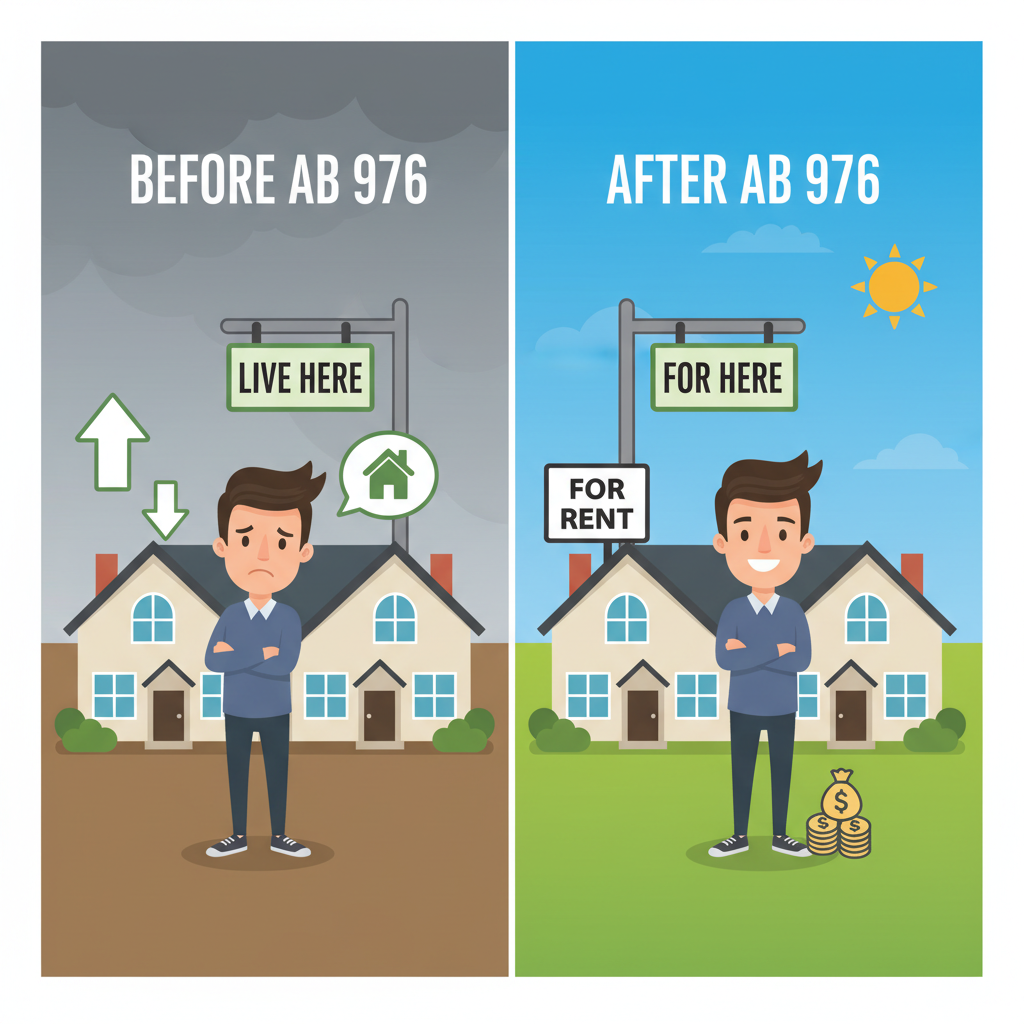
The Owner Occupancy Requirement: Before AB 976
Before AB 976 took effect, the owner occupancy rule was a significant consideration for many homeowners. While some earlier laws had temporarily suspended the requirement for ADUs permitted between 2020 and 2025, AB 976 made the removal permanent.
The Original Intent and Its Limitations
The original intent behind the owner occupancy requirement was often tied to concerns about preserving neighborhood character, preventing absentee landlords, and ensuring that ADUs primarily served as affordable housing options for family members or long-term renters under the watchful eye of an owner-occupant. However, in practice, this requirement created several limitations:
- Reduced Rental Income Potential: Homeowners looking to move or purchase a new primary residence while retaining their existing property as an investment were restricted.
- Limited Investor Appeal: Real estate investors saw less appeal in properties with ADUs if they couldn't rent out both units without living on-site.
- Flexibility Constraints: Life changes, such as job relocation or family needs, could force homeowners to choose between selling their property or violating the owner occupancy rule.
- Financing Challenges: Lenders sometimes viewed owner-occupied properties differently than pure investment properties, potentially impacting financing options.
These limitations, while well-intentioned, often hindered the very goal of increasing housing supply by making ADU development less attractive or feasible for a broader range of property owners.
The Game-Changer: How AB 976 Removed Owner Occupancy
AB 976's impact is straightforward yet revolutionary: it eliminated the owner occupancy requirement for all new ADUs permitted on or after January 1, 2020. This means that if you build an ADU today, you are not legally required by the state or your local jurisdiction to live on the property.
Key Provisions of the New Law
The core of AB 976 is its clear directive to local agencies:
- No Owner Occupancy for New ADUs: Local agencies (cities and counties) are prohibited from imposing owner occupancy requirements on any ADU permitted between January 1, 2020, and January 1, 2025. AB 976 made this permanent.
- Applies to Junior ADUs (JADUs) as well: While JADUs typically have an owner occupancy requirement (the owner must reside in the single-family residence), AB 976 specifically removed the owner occupancy requirement for standard ADUs.
This legislative change represents a significant shift in California's housing policy, prioritizing housing production and homeowner flexibility over previous regulatory constraints.
Who Benefits Most?
The beneficiaries of AB 976 are diverse:
- Current Homeowners: Those who built ADUs prior to 2020 and were subject to the owner occupancy rule now have greater flexibility if they need to move. For those building new ADUs, it means immediate freedom to rent out both units.
- Prospective ADU Builders: The decision to build an ADU is now less constrained by future living arrangements, making the investment more appealing.
- Real Estate Investors: Investors can now more easily acquire properties with ADUs or add ADUs to their investment portfolios, knowing they can rent out both units for maximum income.
- California's Housing Market: By removing a key barrier, AB 976 encourages more ADU construction, directly contributing to the state's urgent need for additional housing units.

Important Exceptions and Considerations
While AB 976 broadly removed the owner occupancy requirement, it's crucial to understand that there can still be specific situations or conditions where it might apply or where other rules take precedence.
Local Ordinances and Deed Restrictions
Although local governments cannot impose owner occupancy requirements for ADUs due to state law, some properties may still have their own restrictions:
- Deed Restrictions: Some properties, particularly those in planned communities or with specific historical covenants, may have deed restrictions that predate current ADU laws. Always check your property's deed.
- HOA Rules: Homeowners' Associations (HOAs) can have their own rules regarding rentals and property use. While state law generally preempts HOA rules that prohibit ADUs, specific rental restrictions might still be in place.
Rental Properties and Special Zones
It's important to differentiate between owner occupancy for ADUs and general rental property regulations:
- Existing Rental Properties: If your property is already a rental, building an ADU on it now allows you to rent both units without living on-site.
- Coastal Zone Properties: ADUs in the California Coastal Zone may have additional regulations, though owner occupancy is typically not one of them post-AB 976.
- Short-Term Rentals: While AB 976 allows you to rent out your ADU, local ordinances regarding short-term rentals (like Airbnb) may still apply. Many cities have strict rules or outright bans on short-term rentals for ADUs. Always verify your local municipality's short-term rental policies.
Navigating these nuances requires careful attention to detail. If you're unsure about how these rules apply to your specific property, it's wise to consult with ADU experts who understand California's complex regulations.

The Impact of AB 976: Empowering Homeowners and Boosting Housing
The removal of the owner occupancy requirement has been a game-changer for homeowners and the state's housing supply, fostering a more flexible and robust ADU market.
Increased Flexibility and Rental Income Potential
For many homeowners, the ability to rent out both their primary home and their ADU unlocks significant financial opportunities. This could mean:
- Increased Cash Flow: Maximize rental income from both units, providing a substantial boost to household finances.
- Relocation Freedom: Owners can move for work, family, or retirement without having to sell their property, maintaining it as an income-generating asset.
- Investment Property Strategy: For those looking to build wealth through real estate, ADUs now present a clearer path to creating multi-unit rental properties on a single lot.
- Enhanced Property Value: Properties with ADUs that can be fully rented are often more attractive to buyers, potentially increasing market value.
Bolstering California's Housing Supply
AB 976 directly addresses California's housing crisis by:
- Incentivizing ADU Construction: With fewer restrictions, more homeowners are likely to consider building an ADU, knowing they have full flexibility in its use.
- Creating New Rental Units: Each ADU represents a new, often more affordable, housing unit, helping to alleviate supply shortages.
- Diversifying Housing Options: ADUs offer a unique housing type that fits various needs, from young professionals to seniors, and can be integrated into existing neighborhoods without extensive new infrastructure.
Streamlining ADU Development
By removing a significant regulatory hurdle, AB 976 further simplifies the ADU development process. Homeowners no longer need to worry about the future implications of an owner occupancy clause when planning their build, making the decision-making process smoother and more predictable.
Navigating Your ADU Project Under the New Rules
While AB 976 has made ADU development more accessible, the process still involves intricate planning, design, permitting, and construction. Understanding the law is just the first step.
Why Expert Guidance is Crucial
Even with favorable state laws, local regulations, zoning ordinances, and building codes can vary significantly from city to city. An experienced ADU specialist can help you:
- Understand Local Specifics: Interpret how state laws like AB 976 interact with your specific city's ordinances.
- Optimize Design for Rental: Design an ADU that maximizes rental appeal, functionality, and long-term value.
- Navigate Permitting: Guide you through the often-complex permitting process, ensuring compliance and efficiency.
- Project Management: Oversee the entire construction process, from initial concept to final touches.
For a seamless and successful ADU project, especially with an eye on rental income, it's invaluable to work with professionals who specialize in California ADU development. You can get a free project estimate to understand the potential and feasibility of your ADU.
In conclusion, AB 976 marked a pivotal moment for Accessory Dwelling Units in California. By permanently eliminating the owner occupancy requirement, it has empowered homeowners with unprecedented flexibility, boosted the state's housing supply, and made ADUs an even more attractive investment. This legislative change reinforces California's commitment to innovative housing solutions and provides a clear path for homeowners to unlock the full potential of their properties. If you're considering an ADU, now is an excellent time to explore the possibilities and benefit from these forward-thinking laws.