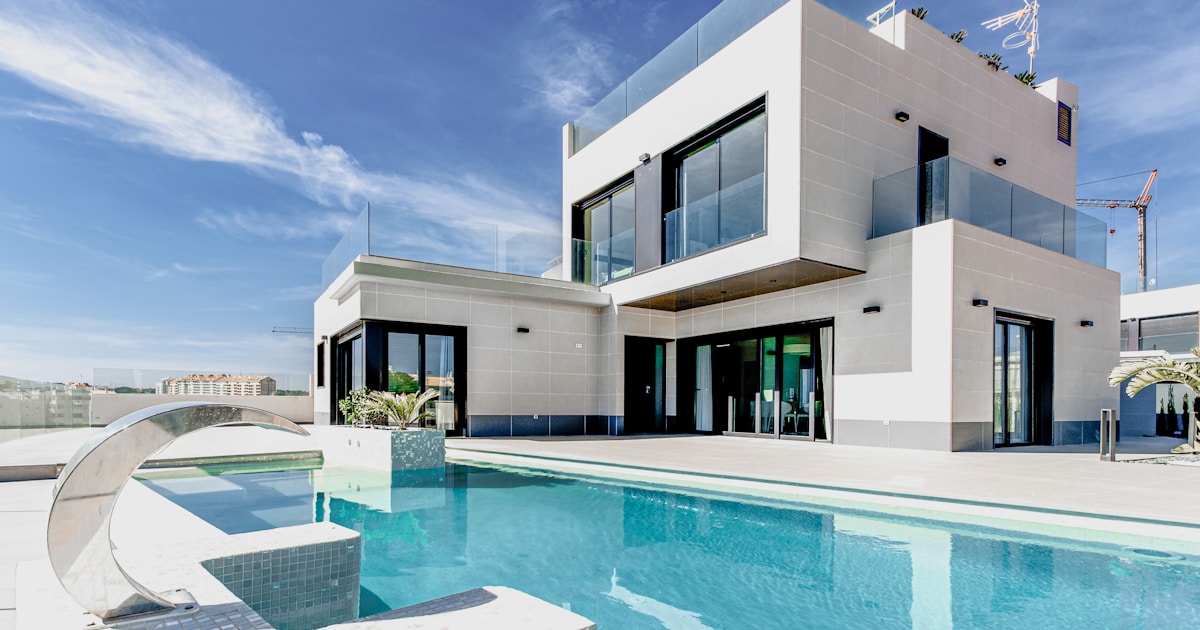

In the Golden State, where innovation meets sustainability, Title 24 standards play a crucial role in guiding the construction and renovation of buildings toward more energy-efficient futures. For homeowners and real estate professionals alike, navigating these regulations is not just about compliance but about contributing to California's broader environmental goals. But, what does adhering to these standards mean for your pocket? This comprehensive guide breaks down the costs associated with obtaining a Title 24 report, offering insights into how these investments can yield long-term benefits.
Introduction to Title 24 Energy Efficiency Standards

Title 24 of the California Code of Regulations, also known as the California Building Standards Code, sets the benchmark for the design and construction of buildings with energy efficiency in mind. Enacted to reduce California's energy consumption, improve the availability of electricity, and offer residents more comfortable living spaces, these standards are a testament to the state's commitment to environmental stewardship and sustainable development.
Understanding the Importance of Title 24 Compliance
For homeowners and real estate professionals, Title 24 compliance is not just a legal requirement; it's an opportunity to enhance property value, reduce operational costs, and contribute to California's environmental sustainability initiatives. Compliance with these standards ensures that new constructions, renovations, and expansions are designed to use energy more efficiently, ultimately leading to cost savings and a reduced carbon footprint.
Contact Us for more information
Title 24 Reports and Costs
Navigating the costs of Title 24 compliance can be complex, given the variety of reports and certifications required depending on the project's scope. At Gatheradu, we simplify this process with a clear pricing structure designed to meet your specific needs without hidden fees.
Residential Title 24 Energy Reports:
- For residential projects, we offer comprehensive Title 24 Energy Reports catering to various project types:
- Single Family Residence:
- Prices range from $300 to $320 depending on the size and additional requirements.
- ADU/Secondary Unit/Junior ADU:
- Flat rate of $300 for basic reports, with an additional charge for specific needs.
- Multi Family Residential Alterations:
- Prices vary based on the number of units, starting from $300 for single-unit alterations to $230 per unit for 6-10 units.
Nonresidential/Commercial Title 24 Energy Reports:
- Our services for commercial projects ensure compliance with Title 24 regulations:
- Lighting, Mechanical, and Envelope Compliance:
- $300 for projects up to 5000 sqft Custom quotes available for larger projects.
- Exhaust Hood Systems and Makeup Air Systems for Commercial Kitchens:
- $300 for smaller projects, custom quotes for larger ones.
Green Forms:
- In addition to Title 24 reports, we offer green building certification services:
- CalGreen Checklist:
- Ensure compliance with residential mandatory measures for $300.
- GreenPoint Rated Checklist:
- Residential GreenPoint Rated forms available for $600.
- Green Building Verification:
- Starting at $600, tailored compliance forms are provided upon request.
Extra Services:
- For specialized needs, we offer additional services:
- Weekend Services:
- Available upon request, starting at $75+ for weekend projects.
- HERS Registration:
- Register your project for Home Energy Rating System compliance for $25.
- HVAC and Room Load Calculations:
- Ensure accurate load calculations for your systems, priced at $75 and $300 respectively.
- Revisions:
- Prices vary based on the extent of changes required, ranging from $69 to $199.
- Contact Us for ADU Plans & Permits
What a Title 24 report covers for an ADU under the 2025 Energy Code
The prices above are only part of the picture. What you are paying for, and how much work the report takes, depends on what kind of ADU you are building and which version of the Energy Code your permit falls under.
Which code version applies to your project
California updates its Building Energy Efficiency Standards (Title 24, Part 6) on a three-year cycle. The 2025 Energy Code took effect on January 1, 2026. According to the California Energy Commission, it applies to building permit applications submitted on or after that date, and those projects must use the 2025 compliance software and the 2025 compliance documents. The date your permit application is submitted, not the date construction starts, decides which version applies. If your plans were prepared under the older 2022 rules and you submit in 2026, expect the energy report to be redone under the 2025 rules.
The three compliance documents
A Title 24 "report" is really a set of forms that follow the project from plan check to final inspection. For single-family buildings, which include most ADUs, the Energy Commission lists three:
- CF1R, certificate of compliance. This is the document most people mean by a Title 24 report. It is prepared during design, shows that the planned insulation, windows, heating and cooling, water heating, ventilation, and lighting meet the code, and is submitted with your permit plans.
- CF2R, certificate of installation. The installers complete these during construction to confirm what was actually installed.
- CF3R, certificate of verification. A third-party rater completes these after field testing, when the plans call for verification.
Because the CF1R comes first and is tied to the drawings, any design change that affects energy use, such as a different window package, a switch in water heater type, or a larger floor area, can mean a revised report. That is one reason revision fees show up on price lists.
Field verification is now called the Energy Code Compliance program
Many contractors still say "HERS testing." Under the 2025 Energy Code, the Energy Commission moved the Home Energy Rating System field verification program into Title 24, Part 1 and renamed it the Energy Code Compliance (ECC) program. The raters who do the testing are now called ECC raters. The job is the same: when your CF1R requires field verification, such as duct leakage or heat pump refrigerant charge testing, a rater tests the work and completes the CF3R before final inspection. That testing is usually billed separately from the CF1R report itself, so ask whether a quote covers only the report or also the field verification.
Does a new ADU need solar?
This is one of the biggest cost questions for a detached ADU, and the answer depends on whether the ADU is newly constructed or created from existing space.
According to the Energy Commission's 2025 Energy Code guidance, solar photovoltaic (PV) requirements apply to newly constructed single-family dwellings, and a newly built ADU is covered. The requirements do not apply to additions or alterations to existing buildings. That generally means a garage conversion or another ADU carved out of existing space does not trigger the new-construction solar requirement, while a new detached ADU may.
Even for a new ADU, the code has exceptions. The Energy Commission lists these, among others:
- No PV system is required if the minimum required system size works out to less than 1.8 kWdc, which can apply to very small ADUs.
- No PV system is required if the solar access roof area is less than 80 contiguous square feet.
- The required system size can be reduced by 25 percent when a battery storage system meeting the code's requirements, with at least 7.5 kWh of capacity, is installed.
The required size is calculated from the climate zone, the conditioned floor area, and the number of dwelling units, and it is limited by how much usable, unshaded roof area the building has. Your Title 24 consultant runs this calculation as part of the CF1R, so the report is also where you find out whether solar is required and how large the system must be.
Heat pumps and the prescriptive path
The 2025 Energy Code's prescriptive requirements for single-family buildings call for heat pump space heating in all climate zones, or meeting the performance requirements instead. Many ADU reports use the performance approach, where approved software models the whole design and allows trade-offs, such as better windows in exchange for a different heating system. Choosing your heating, cooling, and water heating equipment early helps the first version of the report match the final plans.
Questions to ask before you order a report
- Is the report being prepared under the 2025 Energy Code and current compliance software for a 2026 submission?
- Does the quote include the CF1R only, or also field verification by an ECC rater and registration of the documents?
- Is this ADU new construction or a conversion, and does the report show whether solar is required?
- How many revisions are included if plan check comments or design changes affect the energy model?
Your city or county building department enforces the Energy Code and has the final say on what it needs at plan check, so confirm local submittal requirements with them as well.
Tips on How to Reduce Title 24 Report Costs
Reducing the costs associated with obtaining a Title 24 report starts with selecting a knowledgeable and experienced provider. Ask whether the provider uses compliance software approved by the California Energy Commission for the code version your permit falls under, since a report prepared on the wrong version can be sent back for revision. Additionally, planning your project with energy efficiency in mind from the outset can minimize the need for expensive alterations later in the process.

Exploring the Benefits of Investing in Title 24 Compliance
While the initial investment in Title 24 compliance may seem daunting, the long-term benefits cannot be overstated. Energy-efficient buildings not only offer lower operational costs through reduced energy consumption but also contribute to a healthier environment by minimizing carbon emissions. Furthermore, properties that adhere to these standards often enjoy higher market values, making this investment worthwhile.
Conclusion: The Future of Title 24 Compliance and Its Impact on the Real Estate Industry
As California continues to lead the way in environmental policy and innovation, Title 24 standards will undoubtedly evolve to incorporate new technologies and methodologies for achieving greater energy efficiency. For homeowners and real estate professionals, staying ahead of these changes is not just about compliance but about being part of a larger movement toward sustainability and resilience in the face of climate change.
At GatherADU, we are committed to helping you navigate these regulations, ensuring that your projects not only meet current standards but are also poised to adapt to future advancements. With our expertise and cost-effective solutions, achieving Title 24 compliance has never been easier. Contact us today to learn more about how we can support your next project in meeting California’s rigorous energy efficiency standards. Contact Us for ADU Plans & Permits