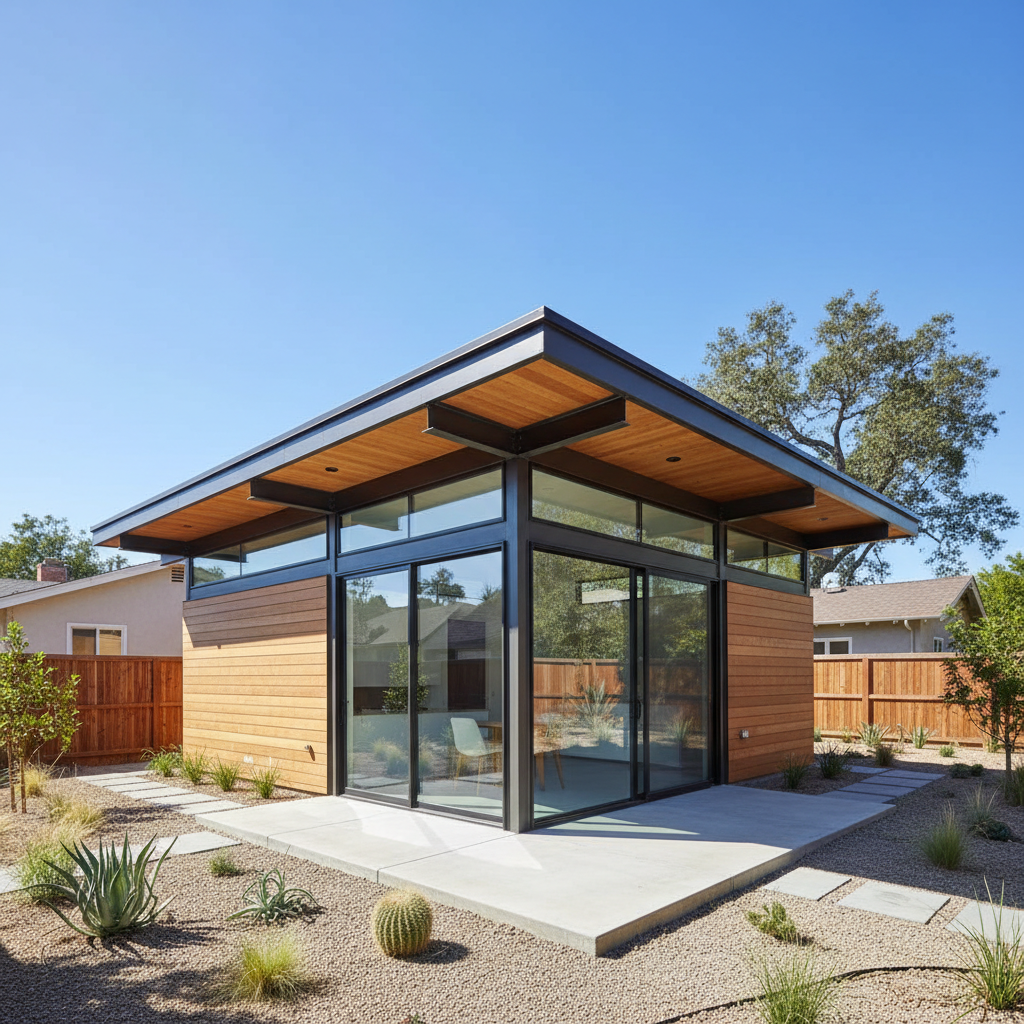
Accessory Dwelling Units (ADUs) have become one of California’s most popular housing solutions. Whether you’re adding rental income, creating a home office, or housing family members, a fully functional and compliant kitchen is what makes an ADU truly livable.
California sets baseline ADU kitchen requirements statewide, but major cities like Los Angeles, San Diego, and San Francisco add their own rules and nuances. Understanding these differences helps you avoid costly design changes and delays in the permitting process.
At GatherADU, we guide homeowners through these city-specific requirements, ensuring your ADU kitchen design is both compliant and efficient. This blog explains what California law requires in every ADU kitchen, then breaks down the local rules in LA, San Diego, and San Francisco so you know exactly what to expect before building.
What Does California Require in an ADU Kitchen?
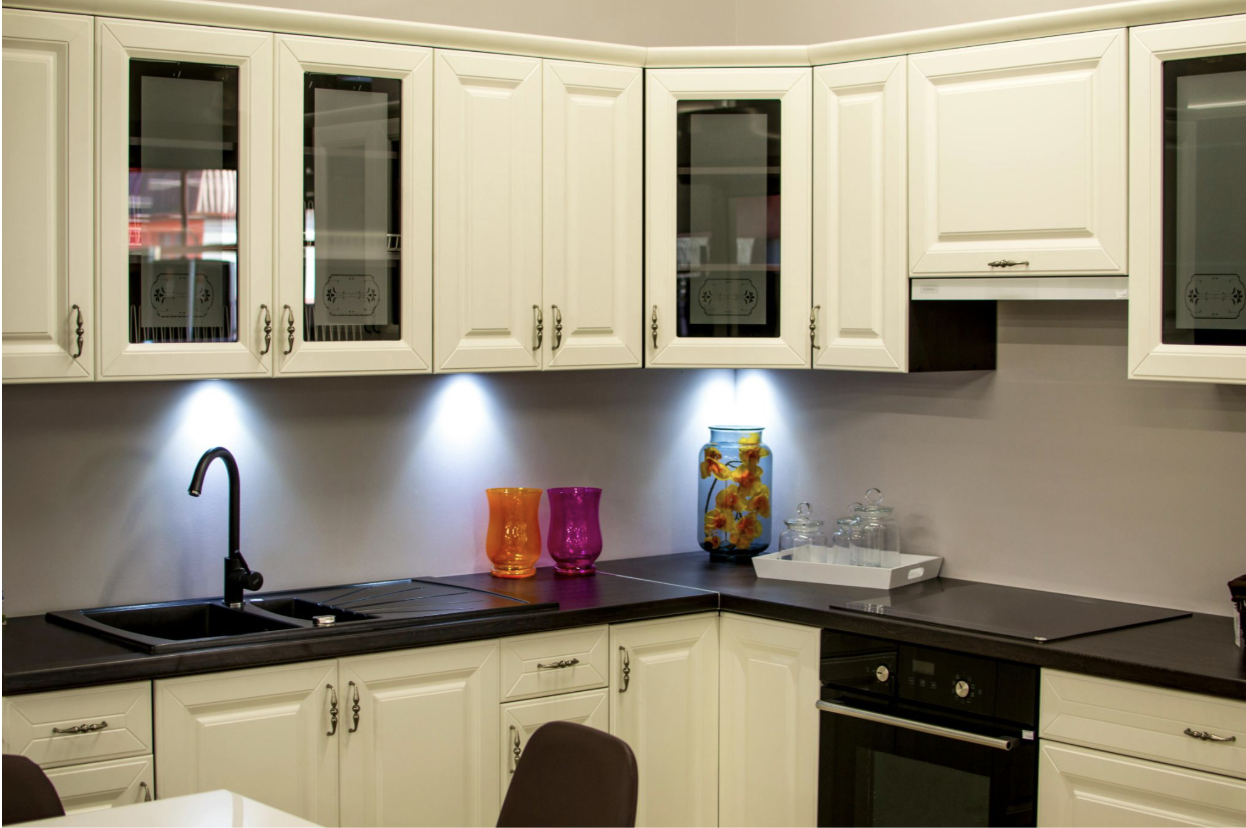
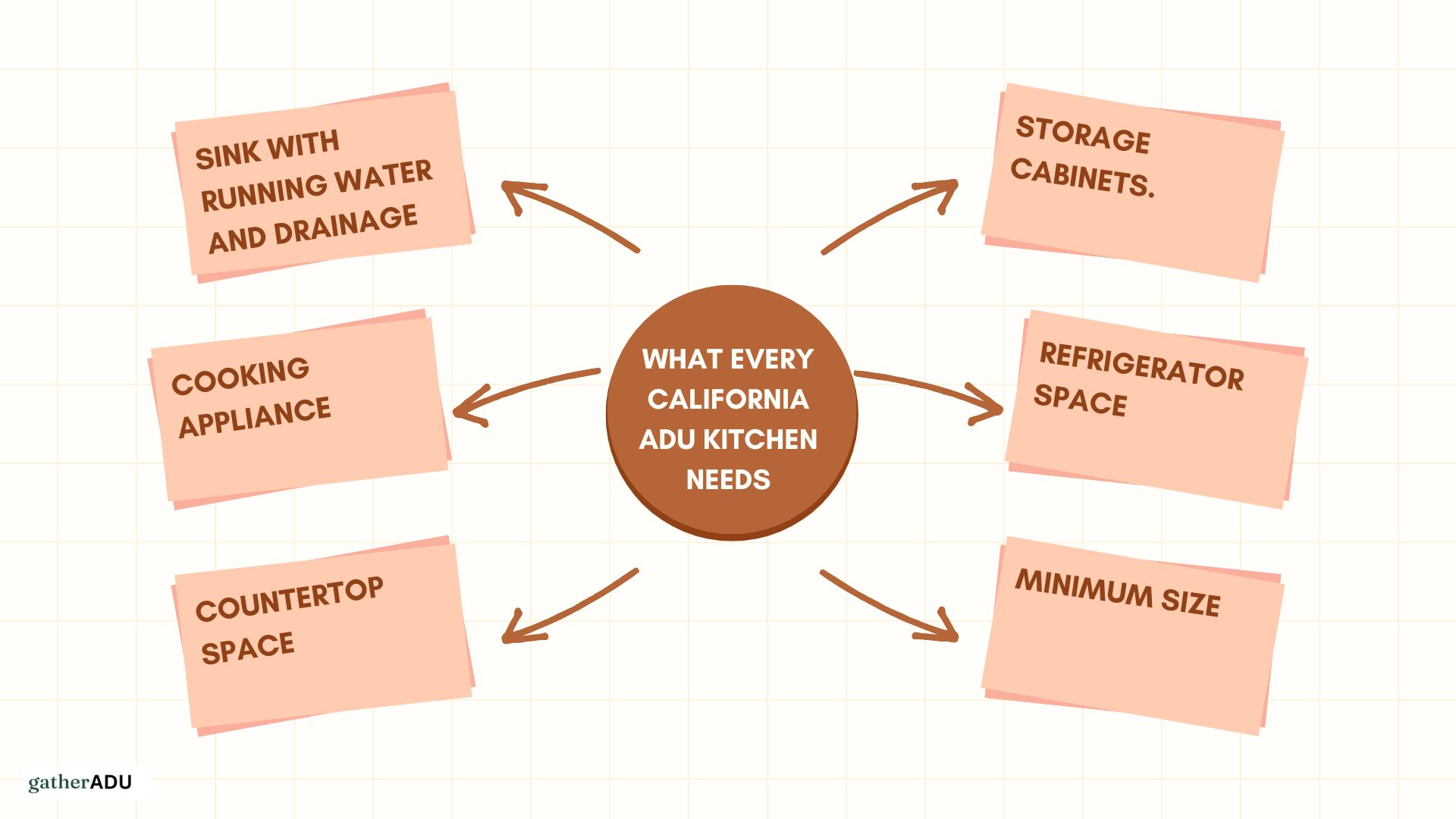
State law requires that every ADU include the basic kitchen features that make it a safe, functional, and independent living space. Regardless of size or design, each ADU kitchen must provide a sink, cooking appliance, storage, countertop workspace, and refrigerator space.
- Sink with running water and drainage: A fully plumbed sink is mandatory.
- Cooking appliance: A stove, cooktop, or oven is required. A microwave alone does not count.
- Countertop space: Adequate prep space for safe food handling.
- Storage: Cabinets or shelving for food, cookware, and utensils.
- Refrigerator space: A dedicated area for cold food storage.
- Minimum size: Around 50 sq. ft. of usable kitchen area is considered standard for compliance.
For Junior ADUs (JADUs), which are up to 500 sq. ft. and located within the main residence, only an efficient kitchen is required. These smaller setups may include:
- A sink with running water.
- Counter or prep surface.
- Storage cabinets.
- Small plug-in appliances such as a microwave or portable cooktop.
In short, full ADUs must include a complete, fully equipped kitchen, while JADUs are permitted to have compact efficiency kitchens designed with smaller appliances and limited features to save space while meeting legal requirements.
Los Angeles ADU Kitchen Requirements
Alignment with State Law
The City of Los Angeles follows California’s statewide standards for ADU kitchens with only minor local variations. To be approved, full ADUs in Los Angeles must include the same essential kitchen elements required under state law, such as:
- Sink with hot and cold running water.
- Cooking appliances such as a stove or range.
- Food storage space and refrigerator.
- Countertop or prep space for meal preparation.
For Junior ADUs, an efficient kitchen with a sink, small refrigerator, and cooking appliances that don’t require 220V wiring is sufficient.
Local Enforcement
While LA doesn’t add extra kitchen-specific requirements, it enforces these rules through its ADU Ordinance (No. 186,481). The city ensures all kitchen elements are included at the plan review stage.
Key takeaway for LA homeowners:
Design your ADU kitchen around the state baseline. As long as you meet California’s requirements, Los Angeles will approve your kitchen design without additional surprises.
San Diego ADU Kitchen Requirements
Full ADUs
In San Diego, permitted ADUs are required to meet the same kitchen standards established by California law, ensuring each unit includes the essential features needed for safe and independent living.
- Sink, stove, prep space, refrigerator, and storage.
- Functional layout that allows for independent food preparation.
Guest Quarters Exception
The main difference in San Diego is how it treats guest quarters, which are not the same as ADUs. Guest quarters are not legal rental units, so they are not allowed to have kitchens. At most, they may include:
- A bar sink.
- A mini-fridge.
No stove or full cooking setup is permitted.
Why This Matters
Homeowners sometimes confuse guest quarters with ADUs. If your project is permitted as an ADU, you must include a full kitchen. If it is classified as guest quarters, you cannot install one.
Key takeaway for San Diego homeowners:
Make sure your project is classified correctly. For ADUs, a full kitchen is always required. For guest quarters, cooking facilities are prohibited.
San Francisco ADU Kitchen Requirements
Full Kitchens Required
San Francisco adheres to California’s statewide baseline for ADUs, requiring every full unit to feature a complete kitchen. To qualify, an ADU kitchen in San Francisco must include the following essential elements:
- Sink with running water.
- Cooking appliance.
- Refrigerator space.
- Food storage cabinets.
- Countertop for preparation.
Efficiency Kitchens for JADUs
Like other California cities, Junior ADUs in San Francisco are only required to have efficiency kitchens, which typically feature compact appliances, limited counter space, and basic storage to maximize functionality within smaller living areas.
Ownership Flexibility
San Francisco recently adopted AB 1033, allowing ADUs to be sold separately, including as condominiums. This makes kitchens even more important since they directly impact property value and marketability.
Key takeaway for San Francisco homeowners:
Kitchens must meet state standards, but designing them with future resale in mind can increase the return on investment.
Designing an ADU Kitchen That Works
Regardless of city, a smart ADU kitchen design balances compliance with functionality. Here are some proven strategies:
- Compact layouts: Galley or L-shaped kitchens save space while meeting legal requirements.
- Multi-purpose appliances: Combination oven/microwave units and two-burner cooktops work well in smaller ADUs.
- Vertical storage: Cabinets that extend upward maximize storage in compact kitchens.
- Durable materials: Use long-lasting, low-maintenance countertops and cabinets to withstand tenant use.
- Natural light: Even a small kitchen feels larger when it has good lighting and windows.
By focusing on both compliance and livability, you create a kitchen that adds value to your property and provides comfort for future occupants.
Why ADU Kitchen Compliance Matters
Building a compliant kitchen is more than checking a legal box it impacts the legality, livability, and value of your ADU.
- Permitting: Without a compliant kitchen, your ADU permit may be denied.
- Rental income: Tenants expect a full kitchen, and short-term rentals often require them by law.
- Resale value: In cities like San Francisco, where ADUs can be sold separately, a well-designed kitchen increases marketability.
- Avoiding costly changes: Fixing non-compliant kitchens later is far more expensive than designing them correctly the first time.
What This Means for Homeowners
California ADU kitchen requirements are straightforward at the state level, but small city-specific differences can affect your project.
- Los Angeles: Follows the state baseline with no extra requirements.
- San Diego: Enforces full kitchens for ADUs but bans them in guest quarters.
- San Francisco: Requires full kitchens and allows ADUs to be sold separately, increasing the value of proper kitchen design.
Whether you’re building in LA, San Diego, or San Francisco, the key is to design a kitchen that meets state standards, respects local rules, and maximizes livability.
Ready to Design Your Perfect ADU Kitchen?
Planning an ADU in California? Don’t leave compliance to chance. At GatherADU, we specialize in ADU design, permitting, and construction management. Our team ensures your kitchen meets both state and local requirements while optimizing space, style, and value.
Start your ADU journey today, schedule a consultation with GatherADU and let’s bring your project to life.
FAQS
What are the basic kitchen requirements for an ADU in California?
Every ADU kitchen in California must include a sink with running water, a cooking appliance, refrigerator space, countertop prep area, and storage cabinets. These elements ensure the ADU functions as an independent, legal, and livable dwelling unit.
Do Junior ADUs (JADUs) need full kitchens?
No. Junior ADUs, which are limited to 500 square feet and located within the main residence, only require efficient kitchens. These typically include a small sink, compact refrigerator, counter space, basic storage, and plug-in cooking appliances.
How do ADU kitchen rules differ in Los Angeles, San Diego, and San Francisco?
Los Angeles and San Francisco closely follow state requirements for ADU kitchens. San Diego also follows state law but prohibits kitchens in guest quarters, allowing only a bar sink and mini-fridge. Compliance depends on correct unit classification.
Can I design a small but compliant ADU kitchen?
Yes. Compact layouts such as galley or L-shaped kitchens meet state requirements if they include the required sink, cooking appliance, fridge space, counter area, and storage. Smart design choices help maximize efficiency while keeping the kitchen fully compliant.
Why is ADU kitchen compliance so important?
Compliance ensures your ADU is legally recognized, safe to rent, and valuable if sold. A non-compliant kitchen may delay permits or require costly redesigns. Building correctly from the start saves time, avoids penalties, and protects long-term property value.