ADUs Allowed in Highland Park

Highland Park ADU Regulations & Building Guide

Yes, you can build an ADU in Highland Park! California state law guarantees your right to add an accessory dwelling unit to your property. Here's everything you need to know about local requirements and regulations.

B
ADU Friendliness ADU-Friendly

Based on local permitting speed, fee structures, and additional regulations beyond state requirements.

What You Can Build

  • 1 ADU + 1 JADU Per single-family lot
  • Up to 1,200 sq ft Maximum ADU size
  • 16 ft height Detached ADU limit
  • No parking required Near transit (1/2 mile)
56,000 Population
$52,000 Median Household Income
$2,000/mo Median Rent
Los Angeles County
Quick Reference

ADU Regulations at a Glance

Up to 1,200 sq ft Max ADU Size
16 ft detached Max Height
4 ft side & rear Setbacks
Often not required Parking
1 ADU + 1 JADU Units Allowed
~60 days Permit Timeline
Highland Park ADU Rules & Regulations

California State ADU Laws

California has some of the most progressive ADU legislation in the country. Recent laws including AB 68, SB 13, AB 881, AB 2221, and SB 897 have significantly streamlined the ADU approval process and reduced barriers for homeowners across the state, including in Highland Park.

Key California ADU Regulations:

  • Size Limits: Detached ADUs can be up to 1,200 sq ft. Attached ADUs can be up to 50% of the primary dwelling or 1,200 sq ft, whichever is less. Junior ADUs (JADUs) can be up to 500 sq ft within the existing home footprint.
  • Setbacks: 4-foot side and rear setbacks for new detached ADUs. Existing structures being converted (like garages) can maintain non-conforming setbacks.
  • Height: Up to 16 feet for standard detached ADUs, 18 feet within a half-mile of transit, and up to 24 feet for two-story ADUs in qualifying zones.
  • Parking: No additional parking required if the property is within a half-mile of a public transit stop, which is relevant for many properties in Highland Park. Otherwise, one space may be required. Tandem parking and mechanical lifts are allowed.
  • Owner Occupancy: No owner-occupancy requirement for ADUs. Owner occupancy is required only for properties with a JADU.
  • Approval Timeline: Cities must approve or deny ADU applications within 60 days.
  • Impact Fees: ADUs under 750 sq ft are exempt from impact fees. Larger ADUs may be subject to proportionally reduced fees.
  • Multiple ADUs: Single-family lots can have one ADU plus one JADU. Multi-family properties can add up to two detached ADUs or convert up to 25% of existing non-livable space.

Highland Park-Specific ADU Considerations:

As a neighborhood within the City of Los Angeles, Highland Park follows the City's ADU ordinance (LAMC Section 12.22 A.31), which implements state law with some local additions:

  • Local Zoning: Mix of R1, R2, and R3 zones. Highland Park-Garvanza HPOZ (Historic Preservation Overlay Zone) applies to many properties. Metro station proximity qualifies for TOD incentives.
  • Lot Characteristics: Highland Park properties typically have lot sizes of 4,500-7,000 sq ft, which provides ample room for most ADU configurations.
  • Common ADU Types: Garage conversions, Detached backyard ADUs, Junior ADUs, Bungalow court additions are the most popular ADU approaches in Highland Park.
  • Garage Conversions: Craftsman-era detached garages are ubiquitous. Many are alley-accessed and convert beautifully to ADUs. Historic overlay zones may influence exterior design.
  • Transit Access: Highland Park's strong transit score of 62 means many properties qualify for parking exemptions, making ADU development easier and more affordable.
  • Rental Market: Very High demand with ADU rents typically ranging from $1,600-$2,600/month for studio/1BR ADU.
  • Historic Overlay: Some properties in Highland Park may be within a Historic Preservation Overlay Zone (HPOZ), requiring ADU exterior designs that are architecturally compatible with the historic character of the neighborhood.

These regulations reflect the City of Los Angeles' commitment to increasing housing options while addressing Highland Park's unique neighborhood characteristics. GatherADU specializes in navigating these regulations to design and build ADUs that comply with all local, city, and state requirements while maximizing value for homeowners.

Recent ADU Law Updates Affecting Highland Park

California continues to update its ADU laws to further streamline the process and remove barriers for homeowners. Recent legislation that benefits Highland Park property owners includes:

  • AB 2221 (2023): Clarified that ADUs cannot be rejected based on the existing primary dwelling's non-conformity with current zoning. This is particularly beneficial for Highland Park's older housing stock, where many homes may not fully conform to current zoning standards.
  • SB 897 (2023): Increased height limits for ADUs, allowing up to 18 feet near transit and up to 24 feet for two-story ADUs in multi-family zones. Given Highland Park's strong transit access, many properties benefit from the increased height allowances.
  • AB 976 (2024): Made the prohibition on owner-occupancy requirements for ADUs permanent. Highland Park homeowners can rent both their primary home and ADU without living on the property.
  • AB 434 (2024): Streamlined the ministerial approval process further, ensuring cities cannot impose unreasonable conditions on ADU applications.

ADU Permitting Tips for Highland Park Homeowners

Successfully navigating the ADU permitting process in Highland Park requires attention to several key areas:

  • Pre-Submission Consultation: Before submitting plans, schedule a pre-review with LADBS or work with an experienced ADU builder like GatherADU who can identify potential issues early.
  • Complete Documentation: Ensure your application includes all required documents including site plans, floor plans, elevations, Title 24 energy calculations, and structural calculations. Incomplete applications are the most common cause of delays.
  • HOA Considerations: While California law prevents HOAs from outright prohibiting ADUs, some Highland Park properties may be in communities with CC&Rs that require design review. HOAs cannot unreasonably restrict ADUs but may have input on aesthetic elements.
  • Utility Coordination: Contact DWP (water and power) and the LA Bureau of Sanitation early in the process to determine if any utility upgrades are needed for your Highland Park property.
  • Timeline Management: The City must approve or deny your application within 60 days. If no decision is made within that period, your application is deemed approved under state law.

GatherADU has helped hundreds of Los Angeles homeowners navigate the ADU process, including many in the Northeast LA area. Our team handles all aspects of design, permitting, and construction, ensuring your Highland Park ADU project proceeds smoothly from concept to completion. Call (323) 591-3717 for a free consultation.

Your Rights Under California Law

California law (AB 68, AB 881, SB 9, and subsequent legislation) guarantees your right to build ADUs. Cities cannot:

  • Require owner-occupancy for ADUs permitted after 2020
  • Require additional parking for ADUs near transit
  • Charge impact fees for ADUs under 750 sq ft
  • Deny ADUs that meet state minimum standards
  • Impose lot coverage limits that prevent a 800 sq ft ADU

If you believe your ADU application is being unfairly denied, California HCD can intervene on your behalf.

This information is for informational purposes only and does not constitute legal advice. Consult a qualified attorney for legal guidance.

About Highland Park

ADU in Highland Park neighborhood

Highland Park is a distinctive neighborhood within the City of Los Angeles, located in Los Angeles County, California. Highland Park is one of LA's most historically significant and rapidly transforming neighborhoods. The York Boulevard and Figueroa Street corridors have become dining and nightlife destinations, while the neighborhood's stock of Craftsman and Victorian homes attracts preservation-minded buyers. Metro A Line access has accelerated the neighborhood's renaissance. With a population of approximately 56,000 residents and a median household income of $52,000, Highland Park represents a middle-class community within the greater Los Angeles metropolitan area.

The neighborhood encompasses several zip codes including 90042, and is situated in the Northeast LA region of Los Angeles. Highland Park is surrounded by the neighborhoods of Eagle Rock, Glassell Park, Mount Washington, Hermon, creating a connected urban fabric of diverse communities. The area's geographic coordinates (34.1114°N, -118.1934°W) place it in the vibrant northeast corridor of the city.

Key landmarks and attractions in Highland Park include Southwest Museum of the American Indian, Highland Park Bowl, York Boulevard corridor, and Figueroa Street corridor. The area is known for its Craftsman bungalows, Victorian homes, Spanish Colonial Revival, with lot sizes typically ranging from 4,500-7,000 sq ft. The average home price in Highland Park is approximately $950,000, and the median monthly rent is around $2,000.

For homeowners considering an Accessory Dwelling Unit (ADU) in Highland Park, the neighborhood offers metro a line stations eliminate adu parking requirements within 1/2 mile. Additionally, historic craftsman homes often have detached garages ideal for conversion. The very high rental demand in the area, combined with rental prices ranging from $1,600-$2,600/month for studio/1BR ADU, makes ADU construction a financially rewarding investment for property owners. Common ADU types in Highland Park include Garage conversions, Detached backyard ADUs, Junior ADUs.

The local economy is driven by Restaurants and bars (York Blvd, Figueroa St), Arts and creative industries, Independent retail, providing a diverse employment base that supports the rental market. The school district serving Highland Park includes LAUSD - includes Franklin High School, Luther Burbank Middle School, contributing to the area's appeal for families.

Transit options in Highland Park include Metro A Line (Highland Park Station, Southwest Museum Station), Metro bus routes on Figueroa St, York Blvd, Avenue 50-64. The neighborhood has a walkability score of 75, a bike score of 65, and a transit score of 62, making it one of the more transit-accessible areas in Los Angeles — an important factor because properties within a half-mile of transit stops are exempt from ADU parking requirements.

Highland Park's unique character, strong walkability, excellent transit connectivity, and very high rental demand make it a highly attractive location for ADU investment in Los Angeles. Whether homeowners are looking to generate rental income, create multigenerational living arrangements, or add a home office studio, an ADU in Highland Park offers substantial value.

ADUs Permitted
Financing Available
Multi-Gen Housing
Rental Income

More About Highland Park

Highland Park, California, is a neighborhood within the City of Los Angeles located in the Northeast LA region of Los Angeles County. Highland Park is one of LA's most historically significant and rapidly transforming neighborhoods. The York Boulevard and Figueroa Street corridors have become dining and nightlife destinations, while the neighborhood's stock of Craftsman and Victorian homes attracts preservation-minded buyers. Metro A Line access has accelerated the neighborhood's renaissance.

Geography and History

Situated at coordinates 34.1114°N, -118.1934°W, Highland Park is positioned within the Northeast LA area of Los Angeles. Highland Park is one of LA's oldest communities, established in 1886. It was once the cultural center of Los Angeles, home to the Southwest Museum (1914), one of the nation's oldest museums. The Arroyo Seco, which runs through the area, gave its name to the Arroyo Seco Parkway (now Pasadena Freeway), the first freeway in the Western United States.

The neighborhood is bordered by Eagle Rock, Glassell Park, Mount Washington, Hermon, Cypress Park, Garvanza, creating a diverse tapestry of communities. Highland Park's zip code is 90042.

Local Economy

Highland Park's economy is driven by several key sectors that shape the neighborhood's character and employment landscape:

  • Restaurants and bars: Restaurants and bars (York Blvd, Figueroa St)
  • Arts and creative industries: Arts and creative industries contributes to the local economy and provides employment opportunities for residents.
  • Independent retail: Independent retail contributes to the local economy and provides employment opportunities for residents.
  • Healthcare: Healthcare contributes to the local economy and provides employment opportunities for residents.
  • Education: Education contributes to the local economy and provides employment opportunities for residents.

Housing Market and Real Estate

Highland Park's real estate market features Craftsman bungalows, Victorian homes, Spanish Colonial Revival, California bungalow courts, Post-war homes, Multi-family apartments. The average home price in Highland Park is approximately $950,000, positioning it as a mid-range option in the competitive Los Angeles market. Lot sizes typically range from 4,500-7,000 sq ft, offering standard urban lot sizes that can accommodate well-designed ADUs.

The median rent in Highland Park is approximately $2,000 per month, and the median household income is approximately $52,000. This rent-to-income ratio indicates a significant need for more affordable housing options, making ADUs an important solution for increasing housing supply.

Transportation and Connectivity

Highland Park offers several transportation options for residents and commuters:

  • Metro A Line (Highland Park Station, Southwest Museum Station)
  • Metro bus routes on Figueroa St, York Blvd, Avenue 50-64

The neighborhood has a walkability score of 75 out of 100, a bike score of 65, and a transit score of 62. The strong transit access is particularly relevant for ADU development, as properties within a half-mile of a major transit stop are exempt from ADU parking requirements under California law.

Schools and Education

Highland Park is served by LAUSD - includes Franklin High School, Luther Burbank Middle School. The neighborhood's educational institutions contribute to its community character and influence the rental market for ADUs, as families seeking quality schools often look for housing in the area.

ADU Regulations in Highland Park

As a neighborhood within the City of Los Angeles, Highland Park follows LA's ADU regulations, which align with and in many cases exceed California state law requirements. These regulations are designed to facilitate ADU development while addressing the city's critical housing needs.

  • Zoning: Mix of R1, R2, and R3 zones. Highland Park-Garvanza HPOZ (Historic Preservation Overlay Zone) applies to many properties. Metro station proximity qualifies for TOD incentives.
  • Types of ADUs: Both attached and detached ADUs are permitted, as well as Junior ADUs (JADUs) of up to 500 sq ft created within the existing footprint of the primary home.
  • Size Limits:
    • Detached ADUs: Up to 1,200 sq ft regardless of lot size (as of January 2025)
    • Attached ADUs: Up to 1,200 sq ft or 50% of the primary dwelling's living area, whichever is less
    • JADUs: Up to 500 sq ft
  • Height Restrictions: Detached ADUs can be up to 16 feet, or 18 feet if within a half-mile of a major transit stop. Two-story ADUs up to 24 feet are allowed in some zones.
  • Parking: Limited parking near commercial corridors. Residential streets have moderate parking availability. Metro A Line reduces car dependence. Importantly, properties within a half-mile of a transit stop (relevant for Highland Park given its transit access) are exempt from ADU parking requirements.
  • Owner Occupancy: No owner-occupancy requirement for ADUs built under California state law. Owner occupancy is required only for JADUs.
  • Setbacks: 4-foot side and rear setbacks for detached ADUs. ADUs converting existing structures (like garages) may maintain existing non-conforming setbacks.
  • Impact Fees: ADUs under 750 sq ft are exempt from impact fees in the City of LA. ADUs 750 sq ft and above may be subject to proportional fees.
  • Design Standards: ADUs must meet Los Angeles Building Code requirements. Properties within a Historic Preservation Overlay Zone (HPOZ) must also comply with design compatibility guidelines for exterior features.

ADU Opportunities Specific to Highland Park

Highland Park presents unique opportunities for ADU development based on its neighborhood characteristics:

  • Metro A Line stations eliminate ADU parking requirements within 1/2 mile
  • Historic Craftsman homes often have detached garages ideal for conversion
  • Rapidly appreciating property values boost ADU investment returns
  • Strong rental demand from young professionals drawn to the neighborhood
  • Some properties in HPOZ (Historic Preservation Overlay Zone) may have design guidelines
  • Bungalow court properties can add ADUs under multi-family provisions

Common ADU Types in Highland Park

Based on the neighborhood's lot sizes, zoning, and housing stock, the most common ADU types in Highland Park include:

  • Garage conversions: Craftsman-era detached garages are ubiquitous. Many are alley-accessed and convert beautifully to ADUs. Historic overlay zones may influence exterior design.
  • Detached backyard ADUs: Detached backyard ADUs up to 1,200 sq ft take advantage of Highland Park's lot sizes (4,500-7,000 sq ft) to create fully independent living spaces.
  • Junior ADUs: Junior ADUs (up to 500 sq ft) created within the existing home footprint offer the most affordable entry point for ADU construction, typically requiring minimal new construction.
  • Bungalow court additions: Bungalow court additions are well-suited to Highland Park's neighborhood character and lot configurations.

ADU Rental Market in Highland Park

The rental demand in Highland Park is rated as Very High, with ADU rental prices typically ranging from $1,600-$2,600/month for studio/1BR ADU. The exceptionally strong rental market in Highland Park makes ADU construction one of the most financially attractive home improvement investments available to homeowners.

Key factors driving Highland Park's rental market include:

  • Average home price of $950,000 keeps homeownership out of reach for many workers, sustaining rental demand
  • Restaurants and bars (York Blvd, Figueroa St) and Arts and creative industries provide a stable employment base of potential tenants
  • Excellent transit connections allow tenants to live car-free or car-light, making ADUs without parking more viable
  • Proximity to Eagle Rock and Glassell Park extends the pool of potential tenants from surrounding areas

Cultural Landmarks and Unique Aspects

Highland Park is known for several unique features that define its character and appeal:

  • Two Metro A Line stations
  • Historic Preservation Overlay Zone
  • York Blvd restaurant/bar corridor
  • Southwest Museum of the American Indian

Why Build an ADU in Highland Park?

Building an ADU in Highland Park offers homeowners a compelling combination of financial return and community benefit:

  • Strong Rental Income: With rents of $1,600-$2,600/month for studio/1BR ADU, an ADU can generate significant monthly income to offset mortgage costs or fund retirement
  • Property Value Increase: ADUs typically add 25-40% of their construction cost to overall property value
  • Housing Flexibility: An ADU can serve as rental income today and accommodate aging parents or adult children in the future
  • Neighborhood Character: Highland Park's craftsman bungalows housing stock and 4,500-7,000 sq ft lot sizes provide opportunities for thoughtfully designed ADUs that complement the existing neighborhood
  • Community Need: Highland Park's very high rental demand reflects a genuine need for more housing, and ADUs provide gentle density that benefits the entire community

ADU Construction Process in Highland Park

Building an ADU in Highland Park involves several key phases, each requiring careful planning and expertise. Here is a detailed overview of what homeowners can expect when building an ADU in this Los Angeles neighborhood:

Phase 1: Feasibility Assessment and Site Evaluation

The first step in building an ADU in Highland Park is determining what is possible on your specific property. This involves:

  • Property Analysis: A thorough evaluation of your lot size (typical Highland Park lots are 4,500-7,000 sq ft), existing structures, setback requirements, and utility connections. Even on standard-sized lots in Highland Park, creative design solutions can maximize ADU living space.
  • Zoning Verification: Confirming your property's zoning designation and any overlay zones that may apply. Mix of R1, R2, and R3 zones. Highland Park-Garvanza HPOZ (Historic Preservation Overlay Zone) applies to many properties. Metro station proximity qualifies for TOD incentives.
  • Soil and Topography Assessment: Standard soil testing ensures the foundation design is appropriate for your specific lot conditions.
  • Utility Assessment: Evaluating existing sewer, water, electrical, and gas connections to determine what upgrades may be needed for the ADU.

Phase 2: Design and Architecture

ADU design in Highland Park should balance maximizing livable space with complementing the existing neighborhood character. Key design considerations include:

  • Architectural Style: Highland Park's housing stock includes Craftsman bungalows, Victorian homes, Spanish Colonial Revival. ADU designs that reference these architectural elements create a cohesive property appearance.
  • Floor Plan Optimization: Whether building a studio, one-bedroom, or two-bedroom ADU, efficient floor plans are essential. Open-concept layouts, built-in storage, and multi-functional spaces help maximize the impact of every square foot.
  • Indoor-Outdoor Connection: Even on compact Highland Park lots, thoughtful design can incorporate small patios, decks, or courtyard spaces that extend the ADU's usable area.
  • Privacy: Window placement, landscaping, and ADU orientation should be carefully planned to provide privacy for both the ADU occupants and the primary residence.
  • Natural Light: Strategic window placement, skylights, and clerestory windows help ADUs feel spacious and airy, reducing the need for artificial lighting during daytime hours.

Phase 3: Permitting

The City of Los Angeles has streamlined its ADU permitting process in compliance with state law. For Highland Park properties, the permitting process typically includes:

  • Submitting plans to the Los Angeles Department of Building and Safety (LADBS)
  • Plan check review (the city must approve or deny within 60 days under state law)
  • Any required environmental or overlay zone reviews (including HPOZ design review for historic areas)
  • Building permit issuance
  • Construction inspections at key milestones
  • Final inspection and certificate of occupancy

The typical timeline from plan submission to permit approval in Los Angeles is 4-8 weeks, though actual timelines can vary based on project complexity and current department workload.

Phase 4: Construction

ADU construction in Highland Park typically takes 5-8 months depending on the type and size of ADU:

  • Garage Conversions: Craftsman-era detached garages are ubiquitous. Many are alley-accessed and convert beautifully to ADUs. Historic overlay zones may influence exterior design. Garage conversions are often the fastest and most affordable ADU type, typically completing in 3-5 months.
  • Detached New Construction: Building a new detached ADU from the ground up provides maximum design flexibility but requires the longest construction timeline, typically 6-10 months.
  • Junior ADUs (JADUs): Converting existing space within the primary home into a JADU can often be completed in 2-4 months, as the basic structure already exists.
  • Prefabricated/Modular ADUs: Factory-built ADU modules can significantly reduce on-site construction time, with installation and finishing work often completed in 2-4 months after the foundation is prepared.

ADU Cost Estimates for Highland Park

ADU construction costs in Highland Park vary based on the type of ADU, size, finishes, and site conditions. Here are approximate cost ranges that Highland Park homeowners can expect:

  • Junior ADU (JADU) - Up to 500 sq ft: $60,000-$120,000. These conversions within the existing home footprint are the most affordable option.
  • Garage Conversion - 400-600 sq ft: $80,000-$160,000. Converting an existing garage saves on foundation and framing costs.
  • Detached ADU - 600-1,200 sq ft: $150,000-$350,000. New construction from the ground up offers the most flexibility but highest cost.
  • Above-Garage ADU - 500-800 sq ft: $130,000-$280,000. Building above an existing or new garage maximizes lot usage.
  • Prefabricated ADU - 400-1,200 sq ft: $120,000-$300,000. Factory-built modules offer consistent quality and faster timelines.

These estimates include design, permitting, construction, and standard finishes. Factors that can increase costs include challenging soil conditions, utility upgrades, and premium finishes. GatherADU provides detailed cost estimates specific to your Highland Park property during the free consultation phase.

ADU Financing Options for Highland Park Homeowners

Several financing options are available to Highland Park homeowners looking to build an ADU:

  • Home Equity Line of Credit (HELOC): With Highland Park home values averaging $950,000, many homeowners have significant equity that can be leveraged to finance ADU construction. HELOCs offer flexible draw periods and competitive interest rates.
  • Cash-Out Refinance: Refinancing your primary mortgage to pull out equity for ADU construction can be advantageous when interest rates are favorable, particularly for Highland Park properties with strong appreciation.
  • Construction Loans: Short-term construction loans provide funding during the building phase and can be converted to permanent financing upon completion.
  • CalHFA ADU Grant Program: California's Housing Finance Agency offers grants of up to $40,000 for pre-development costs (design, permits, soil tests) for ADU projects, available to qualifying homeowners in Highland Park.
  • LA County ADU Accelerator Program: Los Angeles County has programs designed to assist homeowners with ADU development, including technical assistance and potential financial support.
  • Personal Savings: For smaller projects like JADUs or garage conversions, personal savings may cover a significant portion of the construction cost.

The return on investment for an ADU in Highland Park is compelling: with ADU rents of $1,600-$2,600/month for studio/1BR ADU, homeowners can expect to recoup their investment in 7-12 years through rental income alone, while also benefiting from increased property value.

ADU Design Ideas for Highland Park Properties

The architectural character of Highland Park inspires several ADU design approaches that complement the neighborhood while meeting modern living standards:

  • Craftsman bungalows Companion: ADUs designed to match the craftsman bungalows architecture common in Highland Park create visual harmony between the primary dwelling and the accessory unit. Using similar materials, roof pitches, and design details ensures the ADU feels like a natural extension of the property.
  • Modern Contrast: Some Highland Park homeowners opt for a contemporary ADU design that intentionally contrasts with the primary home's traditional architecture, creating visual interest while maintaining scale and proportion.
  • Indoor-Outdoor Living: Southern California's year-round outdoor living climate encourages ADU designs with flowing indoor-outdoor spaces, patios, and garden connections.
  • Sustainable Design: Energy-efficient ADU designs are increasingly popular in Highland Park, incorporating solar panels, energy-efficient appliances, tankless water heaters, LED lighting, and drought-resistant landscaping. California's Title 24 energy code ensures all new ADUs meet high efficiency standards.
  • Aging-in-Place Features: ADUs designed for multigenerational living may include single-story layouts, wider doorways, curbless showers, grab bars, and other universal design features that accommodate residents of all ages and abilities.

Frequently Asked Questions About ADUs in Highland Park

Q: How long does it take to build an ADU in Highland Park?

A: The total timeline from initial design to move-in typically ranges from 8-14 months for a detached ADU in Highland Park. This includes approximately 2-3 months for design and permitting, and 5-8 months for construction. Garage conversions and JADUs can be completed more quickly, often in 5-8 months total.

Q: Do I need to live on the property to build an ADU in Highland Park?

A: Under current California law, there is no owner-occupancy requirement for ADUs. You do not need to live in either the primary dwelling or the ADU. However, if you build a Junior ADU (JADU), owner occupancy in either the JADU or the primary home is required.

Q: Can I rent out my ADU on Airbnb or as a short-term rental in Highland Park?

A: Short-term rental regulations vary. The City of Los Angeles has specific rules regarding short-term rentals that may limit ADU use for platforms like Airbnb or VRBO. As of the most recent ordinance, ADUs used as short-term rentals must comply with the Home-Sharing Ordinance. Long-term rentals (30+ days) are generally unrestricted for ADUs.

Q: What is the maximum size ADU I can build on my Highland Park property?

A: Under California law, detached ADUs can be up to 1,200 sq ft regardless of your lot size. Attached ADUs can be up to 1,200 sq ft or 50% of the primary dwelling's living area, whichever is less. JADUs are limited to 500 sq ft. With Highland Park's typical lot sizes of 4,500-7,000 sq ft, most properties can accommodate a full-size 1,200 sq ft ADU.

Q: How much will an ADU increase my property value in Highland Park?

A: In the Highland Park market, ADUs typically add 25-40% of their construction cost to overall property value. With average home prices at $950,000 and ADU rental income of $1,600-$2,600/month for studio/1BR ADU, the income-generating potential also contributes significantly to the property's appraised value, particularly when assessed using the income approach.

Q: Will I need to provide parking for my ADU in Highland Park?

A: Many properties in Highland Park are within a half-mile of a transit stop (including Metro A Line (Highland Park Station, Southwest Museum Station)), which exempts them from ADU parking requirements. Even for properties farther from transit, replacement parking is not required when converting a garage to an ADU.

Neighborhood Comparison: Highland Park vs. Nearby Areas

Understanding how Highland Park compares to neighboring communities helps homeowners evaluate their ADU investment:

  • Highland Park vs. Eagle Rock: Highland Park's average home price of $950,000 and lot sizes of 4,500-7,000 sq ft compares favorably to Eagle Rock, while its very high rental demand ensures strong ADU returns.
  • Highland Park vs. Glassell Park: Both neighborhoods share Northeast LA characteristics, but Highland Park's unique features including two metro a line stations distinguish its ADU market.
  • Highland Park vs. Mount Washington: Highland Park's transit score of 62 and walkability of 75 provides superior access to public transportation, potentially reducing or eliminating ADU parking requirements.

Getting Started with Your Highland Park ADU Project

Highland Park's ADU regulations aim to support housing development while maintaining the neighborhood's unique character. With its two metro a line stations, historic preservation overlay zone, and very high rental demand, Highland Park offers a compelling case for ADU construction. Whether you're building a detached backyard unit, converting a garage, or creating a junior ADU within your existing home, GatherADU can guide you through every step of the process — from design through permits to finished construction.

GatherADU has extensive experience building ADUs throughout the Northeast LA area of Los Angeles, including in Highland Park and neighboring communities like Eagle Rock, Glassell Park, Mount Washington. Our team understands the unique requirements and opportunities that Highland Park properties present, and we can help you navigate historic preservation guidelines, local zoning rules, and the full permitting process.

Contact GatherADU today at (323) 591-3717 or visit gatheradu.com/contact to schedule your free ADU consultation and discover the potential of your Highland Park property.

Get Your Free Highland Park ADU Feasibility Report

Find out exactly what you can build on your property, estimated costs, and potential rental income.

Types of ADUs You Can Build in Highland Park

California law allows several types of accessory dwelling units on residential properties. Understanding your options helps you choose the best approach for your property and goals.

Detached ADU

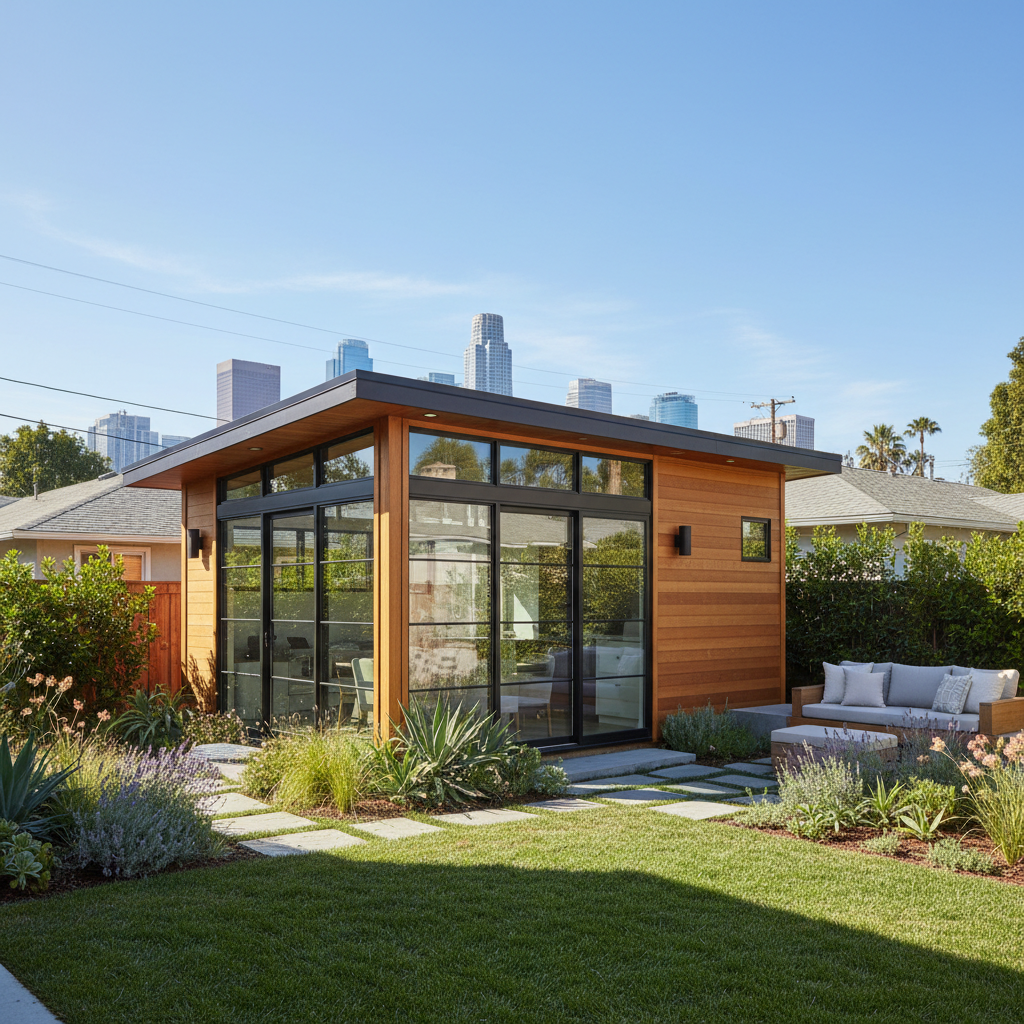
A standalone structure built separately from your main house, typically in the backyard. Detached ADUs offer maximum privacy for both homeowners and tenants, with their own entrance, walls, roof, and complete living facilities. In Highland Park, detached ADUs can be up to 1,200 square feet and 16 feet tall. This option provides the most flexibility in design and placement, though it typically costs more than conversions due to new construction requirements.

  • Max Size: Up to 1,200 sq ft
  • Height: Up to 16 feet
  • Setbacks: 4 ft from side/rear lines
  • Best For: Maximum rental income, privacy

Attached ADU

An addition built onto your existing home, sharing at least one wall with the primary residence. Attached ADUs are often more cost-effective than detached units because they can leverage existing foundation, roof structure, and utility connections. They work well on properties with limited backyard space or where you want to minimize the visual impact of new construction. Many homeowners choose attached ADUs for aging parents who want proximity while maintaining independence.

  • Max Size: Up to 1,200 sq ft
  • Height: Matches main home
  • Setbacks: Same as main structure
  • Best For: Limited lot space, family housing

Garage Conversion ADU

Transform your existing garage into a complete living space. Garage conversions are often the most affordable ADU option in Highland Park because the basic structure already exists. You save on foundation, framing, and roofing costs while creating a valuable rental unit or family living space. California law prohibits cities from requiring replacement parking when you convert a garage to an ADU, making this option particularly accessible. Most garage conversions result in studios or one-bedroom units ranging from 400 to 600 square feet.

  • Typical Size: 400-600 sq ft
  • Timeline: 3-5 months typical
  • Cost: 30-50% less than new construction
  • Best For: Budget-conscious, quick timeline

Junior ADU (JADU)

A smaller unit of up to 500 square feet created within your existing home's footprint, typically by converting a bedroom, basement, or attached garage. JADUs must include a cooking facility (at minimum, a sink, counter, and small appliance outlet) but can share a bathroom with the main house. In Highland Park, you can build both a JADU and a full ADU on the same property, maximizing your housing options. JADUs require owner-occupancy in either the main house or the JADU itself.

  • Max Size: 500 sq ft
  • Location: Within existing home
  • Requirements: Owner-occupancy required
  • Best For: Minimal construction, family use

Above-Garage ADU

Build a new living unit above your existing or new garage structure. This two-story approach preserves your parking while adding living space above. In Highland Park, above-garage ADUs can reach 18-20 feet in height depending on distance from property lines. This option is particularly popular in neighborhoods with narrow lots where backyard space is limited. The elevated position often provides better views and natural light than ground-level units.

  • Max Size: Up to 1,200 sq ft
  • Height: Up to 18-20 feet
  • Parking: Preserved below unit
  • Best For: Limited lot space, maintaining parking

Basement Conversion

While less common in Southern California due to construction patterns, properties with existing basements can convert that space into an ADU. Basement conversions require proper egress windows, adequate ceiling height (at least 7 feet in habitable areas), and may need waterproofing and ventilation upgrades. When properly executed, basement ADUs provide naturally cool living space and complete separation from the main home's daily activities.

  • Max Size: Existing footprint
  • Requirements: Egress, ceiling height
  • Benefits: Cool temps, full separation
  • Best For: Existing basements only

Complete ADU Services in Highland Park

From initial feasibility analysis through final inspection, we handle every aspect of your ADU project. Our Highland Park-focused approach ensures your project meets all local requirements while maximizing value.

01

Feasibility Analysis

We begin every project with a comprehensive analysis of your property's ADU potential. Our team reviews your lot size, zoning, setbacks, utility connections, and neighborhood context to determine what you can build. In Highland Park, this includes understanding any overlay zones, historic district requirements, or other local factors that might affect your project. You receive a detailed report showing your options, estimated costs, and potential rental income before committing to design work.

  • Property zoning verification
  • Setback and lot coverage analysis
  • Utility capacity assessment
  • Cost and ROI projections
02

Design & Architecture

Our design team creates ADU plans tailored to your property and goals. Whether you want a modern studio for maximum rental income or a two-bedroom unit for family members, we design spaces that work. We understand Highland Park architectural context and create designs that complement existing homes while meeting all building code requirements. Every design includes structural engineering, Title 24 energy compliance, and all documentation needed for permits.

  • Custom floor plan development
  • 3D renderings and visualizations
  • Structural engineering
  • Energy compliance documentation
03

Permitting & Approvals

Navigating Highland Park permitting can be complex, but we handle it all. Our team prepares complete permit applications, manages plan check submissions, and coordinates with building department staff to address any comments or corrections. We track your application through the approval process and keep you informed of progress. Our experience with Highland Park regulations helps avoid common pitfalls that delay other projects.

  • Complete permit application prep
  • Plan check management
  • Building department coordination
  • Permit tracking and updates
04

Construction

Our licensed construction team builds your ADU with quality materials and skilled craftsmanship. We handle all aspects of construction including foundation, framing, electrical, plumbing, HVAC, insulation, drywall, flooring, cabinets, and finishes. Throughout the build, we coordinate required inspections, manage subcontractors, and keep you updated on progress. Our goal is delivering a finished ADU that exceeds your expectations while respecting your timeline and budget.

  • Licensed general contractor
  • Quality materials and finishes
  • Inspection coordination
  • Project management and updates
05

Interior Design

A well-designed interior maximizes both livability and rental appeal. Our interior design services help you select finishes, fixtures, and colors that create appealing spaces within your budget. We offer curated finish packages at different price points, or work with you to customize selections. From kitchen layouts that maximize counter space to bathroom designs that feel spacious, we sweat the details that make small homes work beautifully.

  • Finish and fixture selection
  • Space planning optimization
  • Curated design packages
  • Custom interior options
06

Financing Guidance

We help connect you with financing options suited to your situation. Many Highland Park homeowners use home equity, construction loans, or specialized ADU financing products to fund their projects. We can introduce you to lenders experienced in ADU financing and help you understand options including cash-out refinancing, HELOCs, and construction-to-permanent loans. While we're not lenders ourselves, our guidance helps you navigate financing decisions confidently.

  • Financing option overview
  • Lender introductions
  • ROI and cash flow projections
  • Budget planning assistance

How We Build Your Highland Park ADU

Our streamlined process takes you from initial concept to move-in ready ADU. Here's what to expect at each stage of your project.

01 Week 1

Free Consultation

We start with a free consultation to understand your goals, assess your property, and explain your options. This can happen via phone, video call, or an in-person site visit in Highland Park. You'll learn what you can build, approximate costs, and timeline expectations.

02 Weeks 1-2

Feasibility Study

Our team conducts a thorough analysis of your Highland Park property. We verify zoning, calculate setbacks and lot coverage, assess utility connections, and identify any site-specific considerations. You receive a written report with your ADU options.

03 Weeks 3-8

Design Development

Working with our architects and designers, you'll develop floor plans, select exterior styles, and make finish selections. We create 3D renderings so you can visualize the finished ADU before construction begins.

04 Weeks 9-16

Permitting

We submit your complete permit application to Highland Park and manage the entire approval process. This includes responding to plan check comments and coordinating with building department staff through to permit issuance.

05 Weeks 17-32

Construction

With permits in hand, construction begins. Our crews work efficiently while respecting your property and neighbors. For a typical Highland Park ADU, construction takes 4-6 months. You'll have a dedicated project manager throughout the build.

06 Final Week

Walkthrough & Move-In

We conduct a detailed walkthrough, demonstrate systems and appliances, and address any punch list items. Once final inspections are complete, you receive your certificate of occupancy. Your new Highland Park ADU is ready.

ADU Costs in Highland Park

Understanding ADU costs helps you plan realistically and evaluate the investment opportunity. Here's what to expect for typical Highland Park ADU projects.

Garage Conversion

$100,000 - $180,000

Converting an existing garage is typically the most affordable path to an ADU. You save on foundation and framing since the basic structure exists. Costs vary based on garage condition, size, and finish level desired. Most garage conversions in Highland Park result in studios or one-bedroom units between 400-600 square feet.

  • Electrical and plumbing installation
  • HVAC system
  • Insulation and drywall
  • Kitchen and bathroom
  • Flooring and finishes
  • Permits and inspections

Detached New Construction

$200,000 - $400,000

Building a new detached ADU involves complete construction from the ground up. This option costs more but offers maximum design flexibility and typically commands higher rents. A one-bedroom detached ADU in Highland Park typically costs $200,000-$280,000. Two-bedroom units range from $280,000-$400,000 depending on size and finishes.

  • Foundation and site work
  • Complete framing and roofing
  • All mechanical systems
  • Interior and exterior finishes
  • Utility connections
  • Design, engineering, permits

Attached Addition

$150,000 - $300,000

Attached ADUs share a wall with your existing home, which can reduce some construction costs. You may be able to tie into existing roof structure and foundation, though this depends on your home's configuration. Costs fall between garage conversions and fully detached new construction for most Highland Park projects.

  • Foundation extension (if needed)
  • Framing and roofing integration
  • Separate entrance and utilities
  • Complete interior buildout
  • Fire separation requirements
  • Permits and inspections

Return on Investment

$1,800 - $3,500+
Monthly Rental Income (typical)

Actual rents depend on unit size, finishes, location within Highland Park, and current market conditions. One-bedroom ADUs typically rent higher than studios; two-bedroom units command premium rates.

20-30%
Property Value Increase

According to Freddie Mac research, ADUs add 20-30% to property values in high-demand California markets. This often exceeds construction costs, creating immediate equity.

8-12%
Typical Annual Return

When you factor rental income against construction costs, many Highland Park ADUs generate 8-12% annual cash-on-cash returns, competitive with or exceeding other investment options.

Frequently Asked Questions About ADUs in Highland Park

Get answers to the most common questions about building an accessory dwelling unit in Highland Park.

California law requires cities to approve compliant ADU permit applications within 60 days of submission. However, actual timelines in Highland Park depend on several factors including application completeness, plan check workload, and any corrections required. Most homeowners should plan for 3-4 months from project start to permit issuance.
For ADUs permitted after January 1, 2020, California law prohibits cities from requiring owner-occupancy. You can rent out both your main house and your ADU. The exception is Junior ADUs (JADUs), which require the property owner to live in either the main house or the JADU.
In most cases, no. California law exempts ADU parking requirements if your property is within half a mile of public transit, in a historic district, or within one block of car-share pickup. If you convert a garage to an ADU, the city cannot require you to replace the lost parking.
California state law establishes a maximum ADU size of 1,200 square feet for units with more than one bedroom. For attached ADUs, the maximum is 50% of the primary dwelling's floor area or 1,200 square feet, whichever is greater. JADUs are limited to 500 square feet.
ADU rents in Highland Park depend on unit size, finishes, location, and current market conditions. Studios typically rent for $1,400-$2,200 monthly, one-bedroom units for $1,800-$2,800, and two-bedroom units for $2,400-$3,500 or more.
A typical Highland Park ADU project takes 10-14 months from initial consultation to move-in ready. This breaks down as: feasibility and design (2-3 months), permitting (2-3 months), and construction (4-8 months depending on project type and size).
Most homeowners use cash-out refinancing, home equity lines of credit (HELOCs), or construction loans. Some lenders now offer ADU-specific loan products. We can connect you with lenders experienced in ADU financing to explore your options.
Yes, but under California's Proposition 13, only the new construction is reassessed, not your entire property. A $200,000 ADU might add roughly $2,000-$2,500 annually in property taxes, which is manageable compared to $20,000-$40,000 in annual rental income.
California law (AB 670) prohibits HOAs from outright banning ADUs that conform to state law. However, HOAs can impose "reasonable" restrictions on design elements like exterior colors, materials, and landscaping to maintain community aesthetics.
Separate utility meters are not required by law. Options include installing separate meters, submetering to track and bill usage, or including utilities in rent. Many ADU owners choose submetering as a middle ground.

Ready to Build Your ADU in Highland Park?

Get expert guidance on permits, design, and construction. Our team knows Highland Park regulations inside and out.